 (850) 753-0041


7 Things to Know Before Commercial Roof Replacement
September 10, 2026
9 minutes Read
A commercial roof replacement is not a transaction; it is a capital investment that will affect your building’s performance, operating costs, and liability exposure for the next 20 to 40 years. Done correctly, it protects your property, your tenants, and your bottom line. Done incorrectly, it creates ongoing problems that surface within the first few seasons and cost far more to resolve than the savings from choosing the lowest bid. Before you sign a contract or select a material, there are critical things every property owner and facility manager should understand. If you are exploring commercial roofing options for your property, this guide covers what you need to know. Here is what we cover:
- The 7 most important things to know before commercial roof replacement
- How to compare commercial roofing systems and materials
- What the replacement process involves
- How to evaluate commercial roofing contractors
- Frequently asked questions property owners commonly ask

Why Commercial Roof Replacement Decisions Carry More Weight
Commercial roofs cover large areas, house critical building systems, and operate under constant use by tenants, staff, and equipment. A failure does not just mean a repair bill; it means disrupted operations, potential liability for interior damage, and the risk of warranty voids if the underlying causes are not properly documented and addressed.
According to the NRCA, a well-maintained commercial roof lasts approximately 21 years, while a neglected one reaches end of life around 13 years, an eight-year gap that represents a significant deferred replacement cost for any property portfolio. When replacement time does arrive, the decisions made in the planning stage determine whether the new system delivers on that 20-plus-year potential or falls short of it. We’re proud to serve home and business owners in Pensacola, FL, and nearby communities with commercial roofing services that are planned, permitted, and installed to deliver full-service-life performance.
7 Things to Know Before Commercial Roof Replacement
Every commercial roof replacement project involves complexity that residential roofing does not. Understanding these seven factors before the project begins puts property owners and facility managers in a better position to evaluate proposals, manage the process, and protect their investment.
1. A Roof Assessment Comes Before Any Proposal
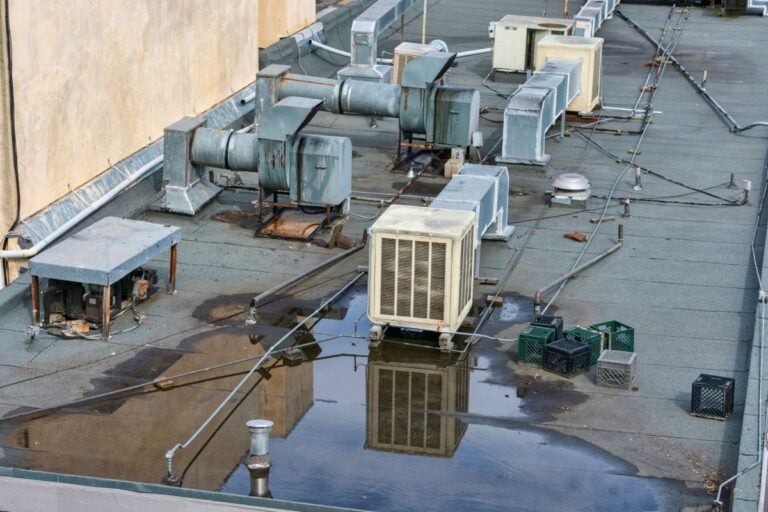
No reputable commercial roofing contractor should provide a replacement proposal without first conducting a thorough assessment of the existing roof. The assessment determines whether replacement is actually necessary or whether restoration is a viable alternative, identifies the condition of the insulation and roof deck below the membrane, locates any areas of trapped moisture that must be addressed before new material is installed, and documents penetrations, drainage points, and equipment curbs that will require custom flashing in the new system. An infrared moisture survey or electronic leak detection scan is the most reliable way to map subsurface moisture that is not visible from the surface. Skipping this step leads to replacement proposals that miss critical scope items, which show up as expensive change orders after the contract is signed.
2. Replacement and Restoration Are Not the Same Decision
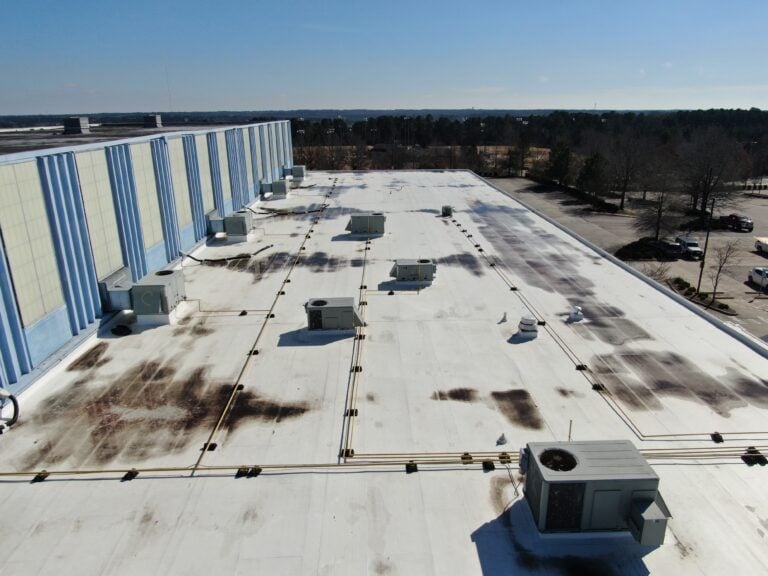
Not every aging commercial roof needs full replacement. A roof with sound underlying insulation, a structurally intact deck, and less than 25 percent saturated area may be a strong candidate for a coating restoration system, a fluid-applied membrane applied over the cleaned and primed existing surface that extends service life by 10 to 15 years at a fraction of full replacement cost. The decision between replacement and restoration hinges on the moisture assessment results, the age and remaining life of the existing system, and the property owner’s timeline. A contractor who recommends full replacement without discussing restoration is not giving you the complete picture.
3. Material Selection Matters More Than Price Per Square
The commercial roofing market offers several membrane systems, each with different performance characteristics, installation requirements, and warranty structures. Key options for Florida commercial properties include:
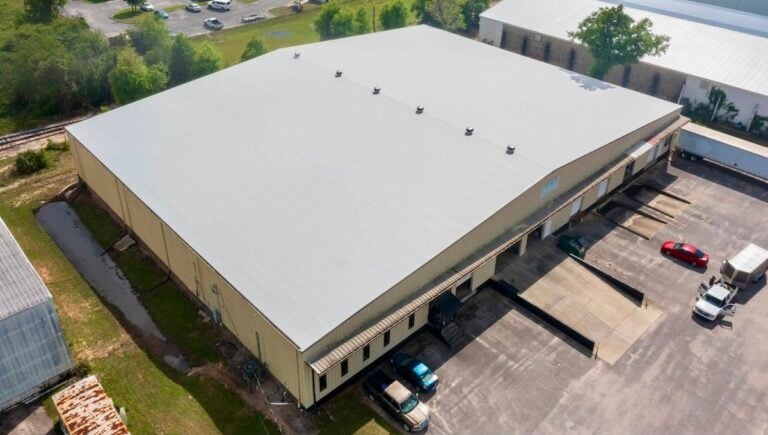
- TPO (Thermoplastic Polyolefin): The most widely specified single-ply membrane for Florida flat roofs. White reflective surface reduces cooling loads, heat-welded seams create watertight bonds, and a 20 to 30-year lifespan makes it a strong value for most commercial applications.
- EPDM (Ethylene Propylene Diene Monomer): A durable rubber membrane that performs reliably in Florida’s climate. Available in mechanically attached, fully adhered, and ballasted configurations. Seams are adhesive-bonded rather than heat-welded, which is the primary maintenance consideration over time.
- Modified Bitumen: A multi-layer asphalt-based system that provides excellent waterproofing and is often used for reroofing over existing built-up roofing systems. Torch-applied, cold-applied, and self-adhering versions are available.
- Standing Seam Metal: A premium option for commercial properties seeking maximum longevity. A standing seam metal roof on a commercial building can deliver 40 to 60 years of service life with minimal maintenance.
- PVC (Polyvinyl Chloride): A single-ply alternative to TPO with superior chemical resistance — the preferred choice for commercial kitchens, restaurant rooftops, and industrial applications where chemical exposure is a concern.

4. Roof Deck Condition Determines True Project Scope
The membrane system sits on top of the insulation, which sits on top of the roof deck. If the deck is compromised, rotted, delaminated, or structurally weakened by long-term moisture exposure, it must be repaired or replaced before any new membrane is installed. Installing a new membrane over a failing deck is the most common cause of premature commercial roof replacement failure. The assessment should include a deck condition evaluation; if the contractor’s proposal does not address deck condition explicitly, ask why.
5. Permitting and Code Compliance Are Non-Negotiable in Florida
Commercial roof replacement in Florida requires a building permit in all jurisdictions. The permit process involves plan review for compliance with Florida Building Code wind load requirements, energy code provisions for insulation R-value, and any applicable High-Velocity Hurricane Zone requirements for properties in coastal counties. Commercial reroofing projects may also trigger requirements for additional insulation under current energy codes even if the underlying insulation appears serviceable. A licensed Florida roofing contractor pulls the permit; any contractor who suggests proceeding without one is operating outside the law and exposing the property owner to liability.
6. Warranty Structure Requires Careful Review
Commercial roofing warranties come in two types that are often confused: the manufacturer’s material warranty and the contractor’s workmanship warranty. These are separate documents covering separate failure modes.
- Manufacturer’s material warranty: Covers defects in the roofing material itself, membrane failures, seam adhesion failures, and premature degradation. Most manufacturer warranties for single-ply systems run 15 to 25 years and require installation by a certified contractor and documented maintenance inspections to remain valid.
- Contractor’s workmanship warranty: Covers installation deficiencies, improper flashing, missed sealant, incorrect fastening patterns. This warranty is only as good as the contractor behind it; a two-year workmanship warranty from a contractor who may not be in business in two years is not meaningful protection.
- NDL (No Dollar Limit) warranties: Available from some manufacturers on qualifying projects, these cover the full cost of repairs including labor without a monetary cap. They require more rigorous installation documentation and may carry a higher upfront cost.
7. Business Continuity Planning Is Part of the Project
Unlike residential roof replacement, commercial roof replacement typically occurs over an occupied building. Tenant operations, inventory, equipment, and personnel all create constraints that must be built into the project plan. Key considerations include sequencing work to minimize roof opening over active spaces, scheduling loud or disruptive phases around business hours, establishing material staging areas that do not interfere with parking or loading docks, and coordinating with tenants on temporary protection of interior spaces adjacent to active work zones. A commercial roofing contractor who does not ask about business operations before submitting a proposal is not planning for the realities of the job.
Comparing Commercial Roofing Systems
Choosing the right membrane system for a Florida commercial property requires weighing lifespan, application fit, and climate performance together, not just upfront cost. The table below covers the most common systems used in commercial roof replacement across northwest Florida, including when each makes the most sense and how it holds up in the state’s heat, humidity, and storm exposure.
| System | Typical Lifespan | Best Application | Florida Suitability |
| TPO (60-mil) | 20-30 years | Flat roofs, general commercial | Excellent — reflective, heat-weldable |
| EPDM (fully adhered) | 20-35 years | Low-slope, mechanically simple roofs | Good — durable, less reflective |
| Modified Bitumen | 15-25 years | Reroofing over existing BUR | Good — multi-layer waterproofing |
| PVC | 20-30 years | Chemical exposure environments | Excellent — chemical resistant |
| Standing Seam Metal | 40-60 years | Long-term investment, sloped commercial | Excellent — best longevity |
| Coating Restoration | 10-15 year extension | Structurally sound existing system | Good — cost-effective alternative |
Frequently Asked Questions About Commercial Roof Replacement
Property owners and facility managers preparing for commercial roof replacement consistently ask the same questions. Here are direct answers to the most common ones.
How do I know when commercial roof replacement is necessary vs. repair?
The threshold most roofing professionals use is 25 percent surface area damaged or moisture-compromised. Below that threshold, targeted repairs or a restoration coating are typically more cost-effective than full replacement. Above it, the compounding repair costs and continued risk of interior damage generally make replacement the better capital decision. An infrared moisture survey provides the objective data needed to make this determination accurately.
How long does commercial roof replacement take?
Timeline depends on roof area, system type, and weather. A typical commercial roof replacement on a 20,000 square foot building runs 5 to 10 business days of active installation. Permit processing adds 1 to 3 weeks in most Florida jurisdictions. Material lead times for specialty products can add additional time. Total project timeline from contract execution to completion typically runs 4 to 8 weeks for a standard commercial project.
What disruption should tenants expect during commercial roof replacement?
Tear-off generates noise and vibration that is noticeable inside occupied spaces. Odors from adhesives and torch-applied materials may be present. Staging materials on the roof can temporarily affect HVAC performance. A professional commercial roofing contractor sequences the work to minimize impact, communicates with tenants in advance about the schedule, and takes precautions to prevent interior dust and debris intrusion. Establishing clear expectations with tenants before the project begins prevents most disruption-related complaints.
How should I evaluate competing commercial roofing proposals?
Compare proposals on scope specificity, not price alone. The proposal should identify the existing system type, the assessment findings, the proposed system with manufacturer and product name, the insulation type and R-value, the warranty structure including both material and workmanship terms, and the permit and inspection process. A proposal that does not specify these details is leaving scope undefined, which means undefined costs. The lowest bid on an underspecified proposal is rarely the lowest total cost when the project is complete.

Quality Roofing Solutions: Commercial Roofing Done Right
Commercial roof replacement is a long-term capital decision that deserves the same due diligence as any major property investment. At Quality Roofing Solutions, we have been completing commercial roofing projects across northwest Florida for over 20 years, with the assessments, the permits, the documentation, and the installation standards that protect property owners and their buildings for the full life of the system.
Request your commercial roof assessment and get a detailed, honest scope of what your property’s roof replacement actually requires.