 (850) 753-0041


Storm Damage Roof Repair (Steps to Take After the Storm)
September 5, 2026
8 minutes Read
Storm damage roof repair is one of the most time-sensitive decisions a Florida homeowner faces, and the steps taken in the first 48 hours after severe weather determine how much secondary damage compounds before a contractor can get on the roof. The storm has passed, the wind has died down, and now the question is what to do next. If you need a team to assess your roof, our storm damage roofing experts are ready to help. Here is what we cover:
- 8 steps to take after storm damage to your roof
- How to identify different types of storm roof damage
- What Florida’s insurance process looks like for roof claims
- Frequently asked questions homeowners commonly ask
Why Acting Fast on Storm Damage Roof Repair Matters

Delaying storm damage repairs does not save money: it compounds costs. According to the 2025 Verisk US Roof Report, average residential roof replacement costs reached $17,631 in 2025, a 33% increase over the prior four-year average, a figure that underscores how much is at stake when a damaged roof goes unaddressed through even one additional rain event. Severe weather does not give roofs time to recover between events: water that enters through a compromised roof deck saturates insulation, accelerates mold growth, rots framing, and turns manageable storm damage repairs into a significantly larger scope.
In Florida, where follow-on storms often arrive within 48 to 72 hours of a major weather event, same-day assessment and temporary protection are critical for any roof that sustained damage. We’re proud to serve home and business owners in Crestview, FL, and nearby communities with storm damage roof repair services that begin with an honest assessment and end with documented, permitted, warranted work.
8 Steps to Take After Storm Damage to Your Roof
Each step in the storm damage roof repair process builds on the last. Getting them in the right order keeps your insurance claim intact, your repair scope complete, and your costs from growing while you wait.
1. Confirm Safety and Document the Damage
Before approaching the exterior, confirm it is safe: check for downed power lines, gas odors, and visible structural damage. Once clear, document everything with timestamped photos and video before any cleanup begins. Capture every side of the roofline, missing or damaged shingles, bent gutters, damaged soffits, and any interior staining already visible. This documentation is the foundation of your insurance claim and must be captured before temporary repairs obscure evidence.
2. Apply Temporary Protection
If the roof has open areas from missing shingles, displaced panels, or falling debris impact, a licensed contractor should install heavy-duty tarps or temporary membrane patches before the next rain event. Temporary protection costs are typically covered under storm damage claims. Document the work with timestamped photos before and after installation.
3. File Your Insurance Claim
File your storm damage claim as soon as temporary protection is in place. Florida law generally requires hurricane-related roof claims to be filed within one year of the date of loss. Filing promptly strengthens the claim and gives the adjuster time to evaluate fresh damage rather than deteriorated conditions. Have your policy number, storm date, and photo documentation ready.
4. Schedule a Thorough Roof Inspection and Meet the Adjuster
A licensed contractor should conduct a thorough roof inspection before the adjuster arrives, producing a written report with photographs that establishes the full scope. Your contractor should be present during the adjuster’s inspection to ensure all documented damage is reviewed. The adjuster’s scope and the contractor’s scope frequently differ: the supplement process resolves those differences. Do not accept a settlement before your contractor confirms it is sufficient to repair roof damage completely.
5. Review the Scope and Supplement If Needed
If the adjuster’s estimate falls short of the full storm damage repairs identified in your contractor’s assessment, the supplement process is how the gap is addressed. Your contractor submits supporting documentation: photographs, measurements, material specifications, and current pricing: to the carrier for review. This is worth pursuing when the initial estimate does not cover a complete, code-compliant repair.
6. Select Materials and Obtain Permits

With an approved scope and settlement, material selection and permitting move in parallel. Storm damage roof repair in Florida requires a building permit in most jurisdictions. Material selection should reflect current Florida Building Code wind resistance requirements: in many coastal zones, this means minimum impact-resistant shingles or equivalent products. No reputable contractor skips the permit step.
7. Complete the Repair or Replacement
The actual repair work follows the permitted scope. Depending on the extent of damage, this may involve targeted section replacement, full roof replacement, or a combination of structural repairs to preserve the structural integrity of the roof deck and framing, underlayment installation, and new roofing material. All work should be inspected by the local building department and documented photographically.
8. Final Documentation and Follow-Up
Collect all closeout documentation: the permit final inspection record, manufacturer warranty registration, contractor’s workmanship warranty, and a complete photo record. Schedule a follow-up inspection 30 to 60 days after completion to confirm no issues have developed at flashing points or newly repaired sections before the next storm season.
Types of Storm Roof Damage in Florida
Understanding what different types of storm damage look like helps homeowners communicate clearly with contractors and adjusters.
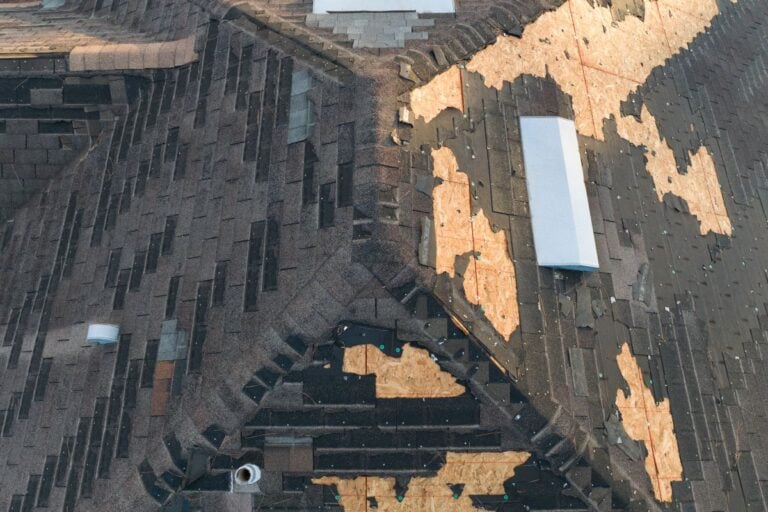
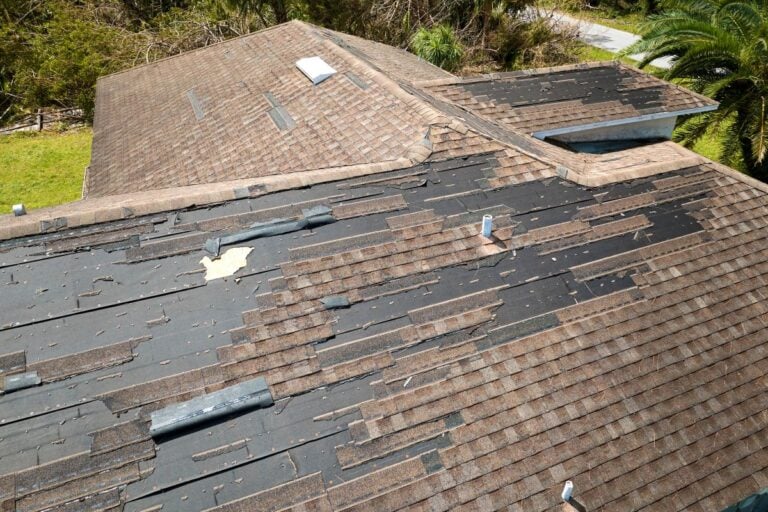
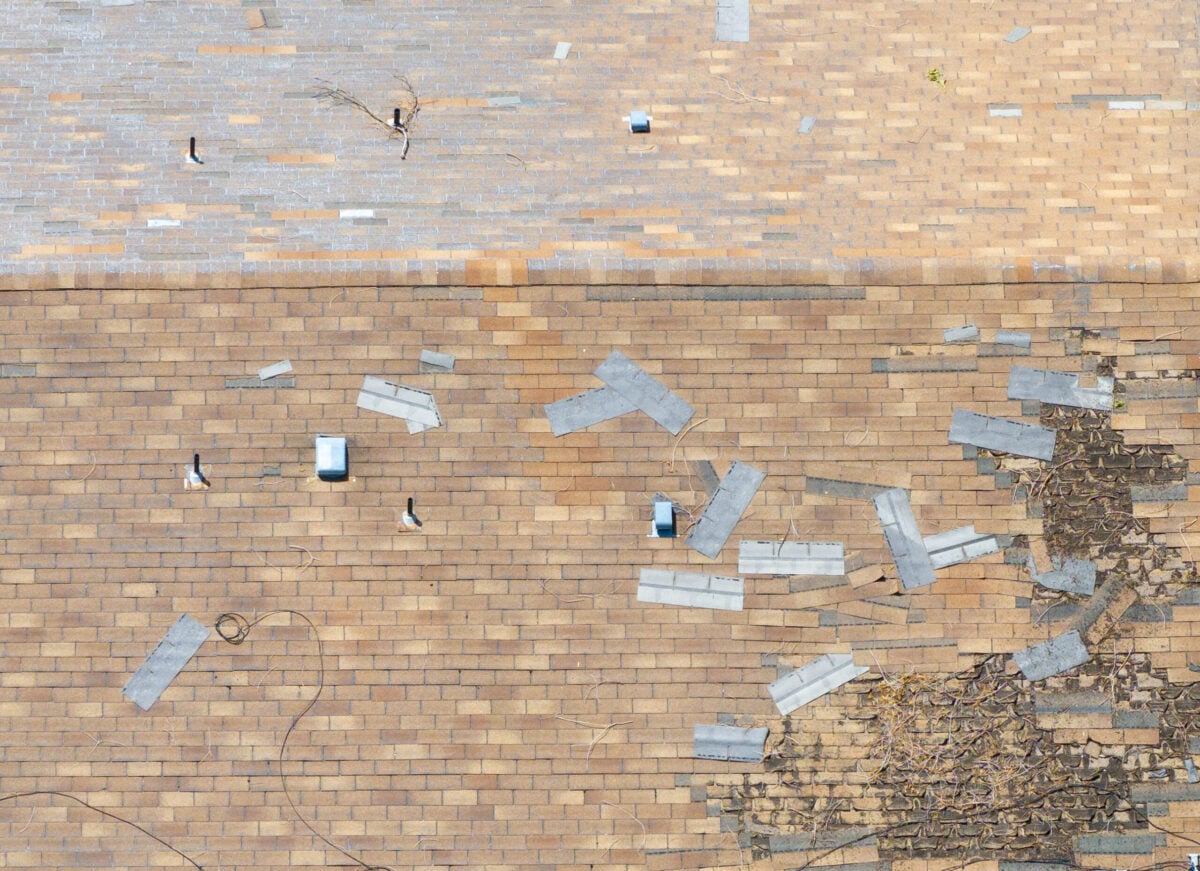
- Wind damage: Missing or damaged shingles concentrated at eaves and rake edges where uplift forces are highest, creased shingles, lifted flashing, and seal strip failures that leave damaged shingles in place but unbonded
- Hail damage: Circular bruising on asphalt shingles that leaves the mat exposed, dents on gutters and flashing, cracked tile surfaces, and damaged pipe boots
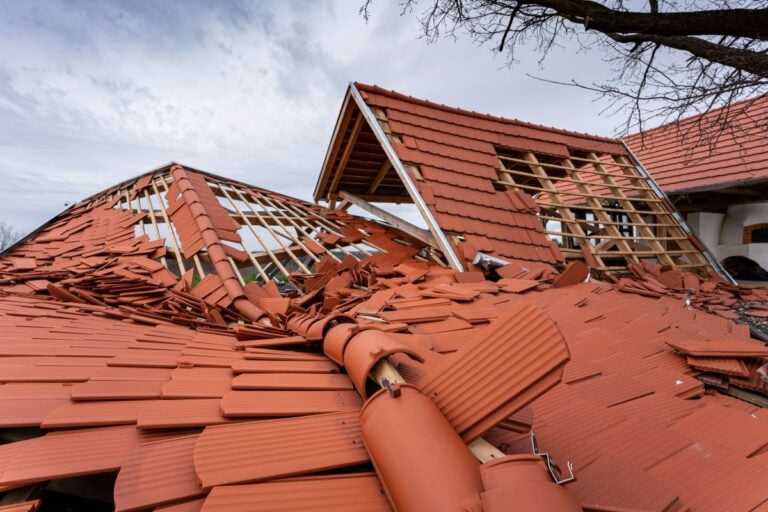
- Falling debris: Branches and airborne materials can wreak havoc on a roof during severe weather: punctures in the deck, displaced sheathing, and damage to skylights and roof-mounted equipment
- Wind-driven rain intrusion: Water staining on attic rafters, wet insulation above the ceiling, and interior staining that appears after the storm even without obvious shingle loss: often caused by seal strip failure invisible from the ground
Florida Insurance Basics for Storm Damage Roof Repair
- Covered perils: Florida policies typically cover wind, hail, falling objects, and wind-driven rain entering through a storm-created opening. Gradual wear and pre-existing conditions are excluded.
- Hurricane deductible: A separate deductible of 2 to 5 percent of insured structure value applies when a named hurricane triggers the claim: higher than the standard deductible.
- RCV vs. ACV: Replacement Cost Value policies pay full repair cost minus the deductible. Actual Cash Value policies subtract depreciation, producing a significantly lower payout on older roofs.
- The 25% rule: Under Florida Statute SB 4-D, if a roof installed to 2007 or newer code sustains damage to less than 25% of its area, insurers generally cover only the damaged portion rather than a full roof replacement.
Frequently Asked Questions About Storm Damage Roof Repair

Homeowners dealing with storm damage tend to have the same urgent questions. Here are direct answers.
How quickly do I need to file a storm damage roof claim in Florida?
Hurricane claims generally must be filed within one year of the date of loss. Non-hurricane storm damage claims carry a two-year deadline, with supplemental claims at 18 months. File as promptly as possible: delays give insurers grounds to attribute secondary damage to delayed action rather than the storm event.
Do I need a permit for storm damage roof repair in Florida?
Yes, in most Florida jurisdictions. Any repair that involves replacing shingles, decking, or underlayment over a certain threshold requires a permit and building department inspection. An unpermitted repair can void insurance coverage for future storm events and create disclosure issues if you sell the home.
How do I know if my roof needs repair or full replacement after a storm?
The threshold most professionals use is 25% surface area: damage affecting less than a quarter of the roof can typically be addressed with targeted repairs. Above that threshold, or when the roof is already near the end of its service life, full replacement avoids the costly repairs and recurring vulnerabilities of patching an aging system. A thorough roof inspection by a licensed contractor gives you an accurate answer.
What if my adjuster says the damage is pre-existing wear, not storm damage?
Request a written explanation and provide your contractor’s documented assessment as a counter. The adjuster bears the burden of supporting their determination with evidence. If the dispute cannot be resolved through the supplement process, Florida homeowners can invoke the appraisal process outlined in their policy, which brings in a neutral umpire to resolve the valuation disagreement.
Quality Roofing Solutions: Storm Damage Roof Repair You Can Count On
The quality of your storm damage roof repair depends on the team you choose in the first hours after the storm. At Quality Roofing Solutions, we have been helping homeowners across northwest Florida through every stage of storm damage roof repair for over 20 years: from the first emergency tarp to the final permit closeout. We also back our work with a Price Assurance Guarantee: if another roofing company gives you a lower quote for the same scope, we will match or beat it.
Request your storm damage inspection and get a thorough, documented assessment before the next rain event arrives.