 850-753-0041


Soffit Repair (Warning Signs, Process & When to Call a Pro)
October 15, 2026
10 minutes Read
Soffit repair is one of those maintenance tasks that homeowners put off because the damage is easy to miss and rarely feels urgent until it is. The soffit sits beneath the roof overhang at the roof edge, out of the direct line of sight from the ground, and it does its work quietly, providing attic ventilation, protecting the rafter tails, and sealing the eave against pest entry and moisture intrusion. When it fails, the consequences reach well beyond the soffit board itself: blocked soffit vents accelerate shingle aging, rotted fascia leads to gutter detachment, and open eave gaps invite pests into the attic space. If your soffit is showing signs of damage, our soffit and fascia repair team can help. Here is what we cover:
- The 5 most common warning signs of soffit damage
- Why soffit condition affects your roof’s performance and lifespan
- What the soffit repair process involves
- When to repair versus replace damaged soffit sections
- Frequently asked questions homeowners commonly ask
Why Soffit Condition Matters More Than Most Homeowners Realize

The soffit is the intake half of your attic’s ventilation system. Ridge vents exhaust hot air at the peak; soffit vents draw cool air in at the eave. When soffit vents are blocked, by damaged soffit panels, paint buildup, or insulation pushed against the vent openings from inside the attic, poor attic ventilation results and the passive ventilation loop breaks down.
According to Today’s Homeowner citing ENERGY STAR data, proper attic ventilation saves up to 15% on energy bills annually, and a well-ventilated attic extends shingle life by preventing the extreme heat buildup that bakes asphalt from below. In Florida, where attic temperatures in summer regularly exceed 150 degrees Fahrenheit, that ventilation function is not a comfort issue, it is a structural one. A soffit system that is not pulling air is a soffit that is shortening the life of everything above it.
We’re proud to serve home and business owners in Gulf Breeze, FL, and nearby Santa Rosa County communities with soffit repair and roofing services that address the full system rather than just the visible damage.
5 Warning Signs Your Soffit Needs Repair
Soffit damage is rarely dramatic at first. These five warning signs are the most reliable early indicators that repair is needed before the problem involves the fascia, gutter system, or attic structure.
1. Visible Sagging, Cracking, or Holes
Sagging soffit panels are the clearest visible sign that the material has lost structural integrity, usually from moisture saturation, rot, or physical impact. Cracks and holes in vinyl or aluminum soffit panels also create open pathways for pest entry and wind-driven rain intrusion at the eave. Any section that deflects when pressed or shows surface cracking should be assessed for replacement rather than patching.
- What to look for: Walk the full perimeter of the home and look upward at each eave run. Note any sections that sag, ripple, or show visible gaps at the panel seams.
- Florida context: UV exposure and thermal cycling cause vinyl soffit panels to become brittle over time, accelerating cracking on south and west-facing eaves.
2. Peeling Paint or Water Staining on the Soffit Face
Discoloration, peeling paint, or water staining on the soffit face indicates that moisture has been reaching the soffit surface repeatedly from above. In most cases this means the roofline above the affected section has a drainage or flashing issue that is directing water onto the soffit rather than away from it. The soffit staining is the symptom; the drainage failure is the cause.
- What to look for: Dark streaks, paint peeling at the edges of soffit panels, or rust staining from corroded soffit vents
- Florida context: High humidity accelerates paint failure and biological growth on soffit surfaces; algae and mildew on the soffit face are a secondary indicator of chronic moisture exposure
3. Pest Activity or Evidence of Nesting
Open gaps in the soffit, even small ones at panel seams, are entry points for squirrels, raccoons, birds, bats, carpenter bees, and wasps. Unlike gaps in exterior walls, soffit breaches are often invisible from the ground and go unaddressed for seasons. The first sign of pest activity is often scratching or rustling sounds from the eave area, followed by visible evidence of nesting material at the roofline, or actual sightings of animals entering and exiting the soffit. Pest intrusion through soffit gaps is one of the most common and costly preventable attic damage scenarios.
- What to look for: Staining or marks at panel seams from repeated entry and exit, debris falling from the eave, or sounds from the attic above the affected section
- Florida context: The subtropical climate supports year-round pest activity. Open soffit gaps in Florida are occupied faster than in cooler climates.
4. Blocked or Crushed Soffit Vents

Soffit vents that are painted over, blocked by debris, or crushed from physical impact restrict the airflow that the attic ventilation system depends on. From outside, this may look like nothing is wrong, but blocked vents produce the same effect as missing vents: reduced intake, higher attic temperatures, and accelerated shingle aging from below.
- What to look for: Soffit vent openings that appear painted or sealed, debris accumulation in vent screens, or any section where the vent profile is visibly deformed
- Florida context: Verifying that soffit vents are clear is particularly important after storm events when debris, leaves, and material can pack into vent openings
5. Fascia Rot Behind the Gutter Line
Soffit and fascia are connected structurally, and fascia damage almost always begins from moisture that originated at the soffit or behind it. When the fascia board behind the gutter shows soft spots, discoloration, or paint bubbling, the rot has typically already reached the rafter tails behind it. Soft fascia also means the gutters are no longer securely attached, which accelerates the drainage problems that worsen the rot.
- What to look for: Press along the fascia face behind the gutter, any section that deflects under light pressure has rot behind the paint
- Florida context: Florida’s humidity and heat accelerate wood rot dramatically. What feels like a firm fascia surface can conceal significant internal rot that only a probe reveals
What Soffit Repair Involves
Soffit repair ranges from panel replacement on isolated sections to full eave assembly restoration when rot has reached the fascia, rafter tails, or roof deck. Understanding the typical scope helps homeowners evaluate contractor proposals and understand what is and is not included.
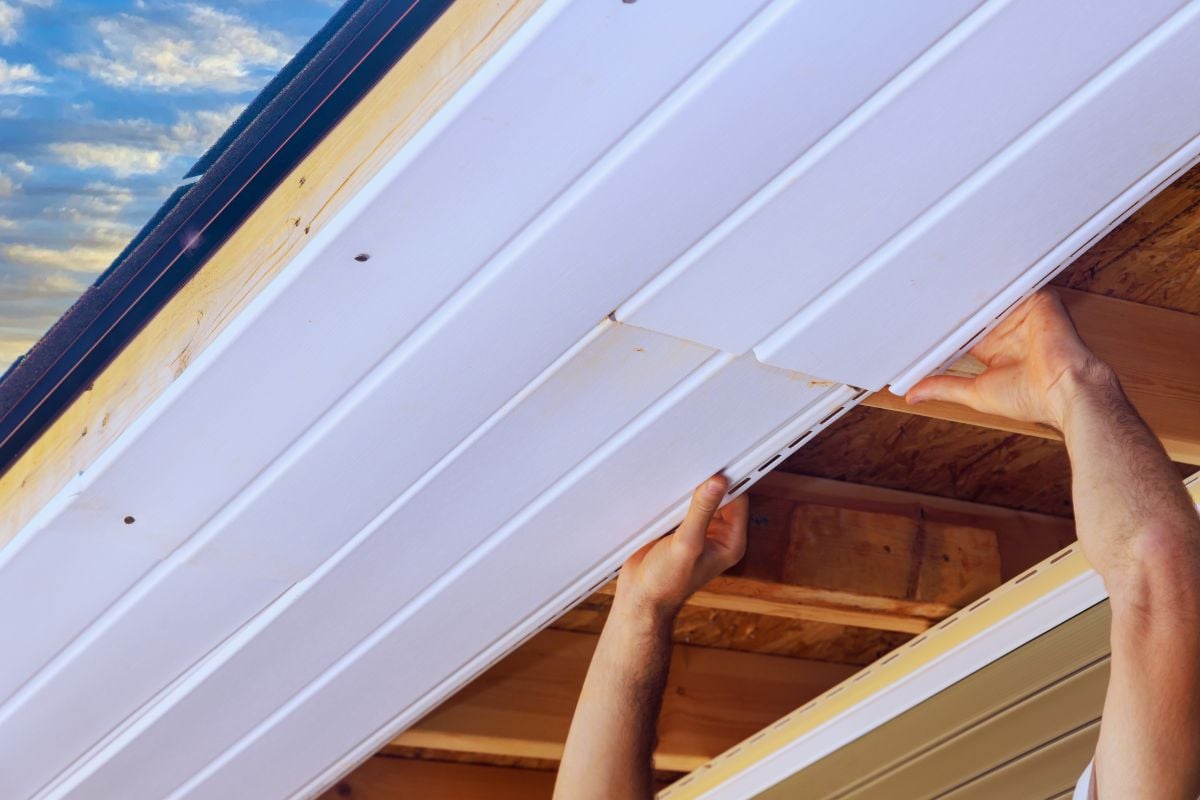
- Panel-only repair: Damaged or cracked soffit panels are removed and replaced with matching material. Aluminum and vinyl panel systems use interlocking profiles that allow section replacement without disturbing adjacent panels. This is appropriate when the fascia and underlying structure are sound.
- Fascia repair: When the fascia board is rotted behind the soffit, fascia repair must be completed before new soffit panels are installed. Attaching new soffit to rotted fascia produces a system that will pull away from the structure within a season.
- Rafter tail repair: Rot that has reached the rafter tails requires carpentry work to sister or replace the damaged framing before the fascia and soffit are rebuilt. This scope requires a licensed contractor.
- Vent replacement: Corroded, painted-over, or damaged soffit vents are replaced with compatible vent products during any soffit repair scope. Upgrading to continuous perforated soffit panels from individual vents can meaningfully increase the intake ventilation area.
Repair vs. Replace: How to Decide
| Condition | Repair | Replace Section |
| Single cracked or sagging panel, sound structure | Yes | No |
| Multiple panels compromised across a run | No | Yes |
| Paint staining, no structural damage | Yes, address drainage cause | No |
| Fascia rot behind the gutter | No | Yes, fascia and soffit together |
| Rafter tail rot visible from attic | No | Yes, full scope with carpentry |
| Blocked vents, sound panels | Clean or replace vents only | No |
As a general rule, if more than 25 percent of a given eave run shows damage, section replacement is more cost-effective than individual panel repairs. When soffit damage is accompanied by shingle failure above it, roof replacement may be part of the same scope. If the fascia or rafter structure behind the soffit is compromised, replacement is not optional.
Frequently Asked Questions About Soffit Repair

Florida homeowners dealing with soffit damage tend to ask the same practical questions. Here are direct answers.
How much does soffit repair cost in Florida?
Panel-only soffit repair on a standard Florida home typically runs $8 to $15 per linear foot for vinyl or aluminum replacement. Fascia repair cost adds $6 to $12 per linear foot when the fascia board requires replacement alongside the soffit. Rafter tail repair adds variable carpentry cost depending on the extent of damage. A typical eave run of 20 to 30 linear feet with combined soffit and fascia replacement runs $500 to $1,500 for most Florida homes. Full perimeter replacement on a larger home with structural involvement can reach several thousand dollars.
Can I repair soffit panels myself?
Panel-only soffit replacement on accessible eaves is within the capability of a homeowner with basic tools and comfort on a ladder. Vinyl and aluminum interlocking soffit systems are designed for section replacement. When structural damage is present, attempting to replace soffit yourself without addressing the underlying rot will result in the new panels failing at the same points within a season. Any repair involving fascia replacement, rafter tail work, or roof-adjacent carpentry should be handled by a licensed contractor. Improperly installed fascia or soffit adjacent to the roofline can create water intrusion pathways that are difficult to trace and expensive to remediate.
How do I know if my soffit vents are providing adequate airflow?
The basic check is visual: from the ground, soffit vent openings should show clear screen or perforation with no paint, debris, or physical blockage. From the attic, you should be able to see daylight at the vent openings and should feel airflow movement near the eaves on a day with any wind. If the attic feels significantly hotter than the outdoor air temperature and the soffit vents appear clear, the issue may be insulation blocking the vent openings from inside, a common and easy-to-miss cause of ventilation failure.
When does soffit damage require a full roof inspection?
Any soffit damage accompanied by interior water staining on ceilings, staining on attic rafters, or evidence of chronic moisture above the damaged section warrants roof repair and a roof inspection to identify the drainage or flashing failure driving the water onto the soffit. Soffit damage on its own does not necessarily indicate a roof problem, but soffit damage combined with interior moisture evidence almost always does.
Quality Roofing Solutions: Soffit Repair Done Right
Soffit repair that is done correctly addresses the cause as well as the visible damage, replaces the fascia when the fascia is compromised, confirms ventilation is restored, and leaves the eave assembly sealed against pest entry and water intrusion. At Quality Roofing Solutions, our soffit repair services cover everything from isolated panel replacement to full eave assembly restoration across northwest Florida, with over 20 years of experience and attention to underlying causes that produce repairs that hold.
Schedule your free eave and soffit assessment and find out what your soffit actually needs before the next storm season tests it.