850-753-0041


Emergency Roofing Services: What Counts & Who to Call
October 20, 2026
10 minutes Read
Emergency roofing services are one of the most searched terms after a major storm in Florida, and they are also one of the most exploited by contractors who arrive door-to-door claiming urgency that benefits them more than the homeowner. Knowing what actually qualifies as a roofing emergency, what immediate steps to take, and what to look for in the contractor you call is the difference between protecting your property and making a costly decision under pressure. If you need immediate assistance with a damaged roof, our storm damage response team is available to help. Here is what we cover:
- What qualifies as a genuine roofing emergency
- 6 situations that require emergency roofing response
- What to do in the first hour after discovering roof damage
- How to evaluate a contractor calling themselves emergency roofers
- Frequently asked questions homeowners commonly ask
Why Emergency Roofing Decisions Are High Risk

Roofing decisions made under pressure are consistently more expensive and more likely to go wrong than planned replacements. According to This Old House’s 2026 Roofing Survey, nearly 60% of homeowners described their roof replacement project as urgent or an emergency, and the top pre-project concerns were total cost and choosing a trustworthy contractor, together accounting for over 60% of all homeowner worries before work began. That combination of urgency and concern about contractor trustworthiness is exactly the environment that produces poor decisions and regret.
Florida’s storm season compounds the risk for both residential and commercial properties. In the hours and days after a significant weather event, contractors from out of state flood into the market alongside legitimate local roofers, making it harder than usual to distinguish between companies that will do the work correctly and companies that will collect a deposit and move to the next storm market. Understanding the emergency roofing landscape before you need it is the most effective protection against making a rushed call you regret.
We’re proud to serve home and business owners in Crestview, FL, and nearby Okaloosa County communities with emergency roofing response that is licensed, documented, and backed by real warranty coverage.
What Qualifies as a Roofing Emergency?
Not every roof problem requires an emergency response call. Some conditions are urgent but not dangerous and can be managed with temporary protection until a scheduled appointment is available. Others require immediate action because delay will cause rapidly compounding damage or create safety risks for the occupants.
A roofing emergency is any condition where the roof has been breached or compromised in a way that exposes the interior to water intrusion, structural failure, or immediate safety risk, and where delay beyond 24 to 48 hours will materially worsen the outcome.
6 Situations That Require Emergency Roofing Response
These are the conditions that genuinely warrant an emergency roofing call rather than a scheduled appointment.
1. Active Roof Collapse or Structural Failure
Any visible sagging of the roof deck, cracking of interior ceiling surfaces under visible weight, or sounds of framing movement during or after a storm indicate potential structural failure. This is the highest priority emergency: the building may not be safe to occupy and an emergency assessment is needed before reentry.
- Immediate action: Exit the structure, contact emergency services if occupant safety is in question, and call a licensed contractor for emergency structural assessment.
- Do not: Attempt to access the roof or attic to assess the damage personally.
2. Open Roof Deck After Storm Impact
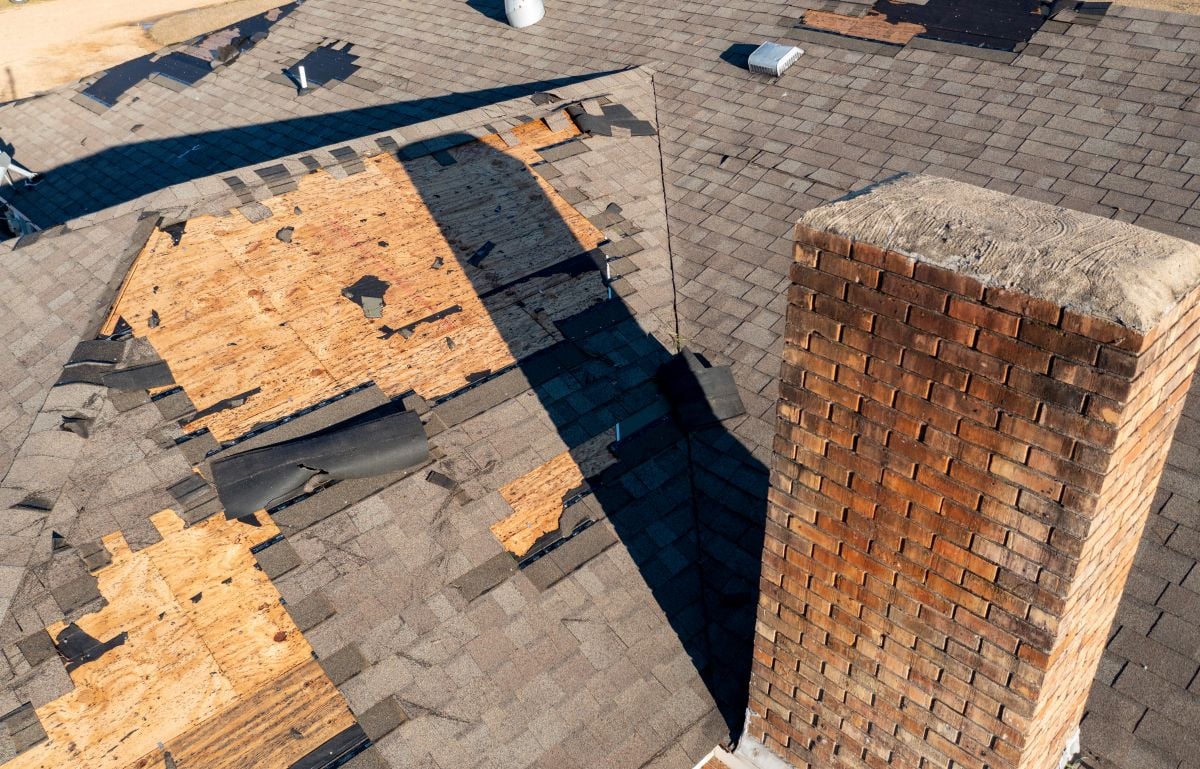
Missing shingles, torn-away sections of roofing material, or impact damage that has created an opening to the roof deck constitute emergency roof damage that requires immediate action. Every subsequent rain event will drive water through those openings into the insulation, decking, and ceiling below. In Florida, where afternoon thunderstorms can follow overnight within 24 to 48 hours of a major storm, temporary tarping within hours of discovery is critical.
- Immediate action: Document with photos first, then contact a licensed contractor for emergency tarping. Temporary protection costs are typically covered under storm damage insurance claims.
- Do not: Attempt to tarp a damaged roof from the outside without safety equipment and a second person present.
3. Active Interior Water Intrusion During Rain
Active roof leaks, where water drips or runs into the living space during or immediately after a rain event, indicate an active breach. If the intrusion point is at a ceiling light fixture, electrical panel area, or near any electrical wiring, the water intrusion creates an electrocution risk that elevates the urgency beyond property damage.
- Immediate action: Turn off electrical circuits in the affected area at the breaker panel if water is near electrical fixtures. Place buckets and towels under active drip points. Puncture any bulging ceiling section at its lowest point with a screwdriver to allow controlled drainage rather than collapse. Call for emergency assessment.
- Do not: Use electrical fixtures in rooms with active ceiling water intrusion.
4. Tree or Debris Impact on the Roof

A fallen tree, large branch, or airborne debris that has struck the roof creates multiple simultaneous problems: visible structural damage, likely breach of the roofing material, potential damage to the roof deck and framing below, and possibly an ongoing load on the structure from the debris itself. The debris must be removed and the damage assessed before the next rain event.
- Immediate action: Do not attempt to remove large debris yourself. Contact a licensed contractor for emergency assessment and debris management. If the tree has also struck power lines or the electrical service entry, contact the utility company before any contractor accesses the site.
- Do not: Allow contractors on the roof while debris is in contact with utility lines.
5. Post-Hurricane Shingle Loss Across Multiple Slopes
Wind damage that has stripped shingles from multiple roof slopes simultaneously has compromised the weather barrier across a large portion of the roof surface. Even though the damage may not have produced interior water intrusion during the storm itself, every subsequent rain event increases the interior damage risk significantly.
- Immediate action: Document the damage thoroughly from the ground, apply temporary tarping where safely accessible, file the insurance claim, and schedule an emergency inspection before the next rain event.
- Do not: Sign contracts for permanent repair work with door-to-door contractors before getting an independent inspection.
6. Flashing Failure Producing Recurring Interior Leaks
A leaking roof caused by flashing that has separated at a chimney, skylight, or wall-to-roof transition during a storm is an emergency, not because the volume of water is large, but because repeated intrusion through the same point will saturate framing and insulation across multiple wet cycles, producing mold and structural damage that is far more expensive to remediate than the flashing repair itself.
- Immediate action: Apply temporary sealant to the visible gap from outside if safely accessible. Contact a licensed roofing contractor for emergency flashing repair before the next rain event.
- Do not: Treat recurring small leaks as manageable. The damage accumulates below the visible surface.
What to Do in the First Hour
The actions taken in the first 60 minutes after discovering roof damage determine how much secondary damage occurs before a contractor can respond.
- Document everything first: Photograph and video every aspect of visible damage before touching anything. Date-stamped documentation is the foundation of any insurance claim.
- Protect the interior: Move valuables from affected areas, place buckets under active drip points, and lay down towels or plastic sheeting to protect flooring.
- Manage electrical risk: If water is near any electrical fixture or outlet, turn off the affected circuits at the breaker panel.
- Apply temporary protection only if safe: Ground-level tarping over accessible damage is appropriate as a temporary measure. Do not access a damaged roof surface without proper safety equipment.
- Call a licensed local contractor: Prioritize local, licensed contractors with a verifiable physical presence over door-to-door solicitations or contractors without a local address.
How to Evaluate Emergency Roofing Contractors

The contractor selection pressure in an emergency situation is real, but the same verification steps that apply to planned roofing work apply here, they just need to happen faster.
- Verify the Florida license: Check the contractor’s license at myfloridalicense.com on your phone before signing anything. Emergency work requires the same Florida Certified Roofing Contractor license as any other roofing project.
- Avoid large upfront deposits: A reasonable deposit for materials is normal. Demanding 50 percent or more before any work begins is a risk indicator regardless of the urgency being communicated.
- Get a written scope before signing: Even in an emergency, any legitimate contractor who handles both temporary protection and permanent roof installation can produce a written scope for temporary protection work before taking payment. No written scope is a red flag.
- Confirm insurance is current: Request proof of general liability and workers’ compensation insurance. An injured worker on your damaged roof without coverage creates liability that follows the property owner.
- Refuse assignment of benefits pressure: Any contractor who requires you to sign over your insurance claim rights as a condition of starting work is using a practice that Florida significantly restricted in 2019. Do not sign insurance rights over before understanding exactly what you are transferring.
Frequently Asked Questions About Emergency Roofing Services
Homeowners dealing with active or recent roof damage tend to ask the same urgent questions. Here are direct answers.
How quickly can an emergency roofer respond in Florida?
Emergency roofing response times range from under two hours for contractors with a dedicated emergency roofing crew to 48 hours or more during widespread storm events when local demand is extremely high. After a major hurricane or tropical system, every licensed local contractor is at capacity and prioritizes the most severe structural emergencies. Having a relationship with a local roofing company before a storm event is the most reliable way to get a fast response when you need it.
Does homeowners insurance cover emergency roof tarping?
Yes, in most cases. Temporary protection costs, including tarping and emergency board-up, are typically covered as part of an approved storm damage claim because they represent reasonable steps to prevent additional damage. Document all temporary protection work with timestamped photographs and save all receipts for submission with the claim.
What is the difference between emergency roof repair and a full roof replacement?
Emergency repair addresses the immediate breach to stop ongoing water intrusion and stabilize the structure. It is not a permanent solution and is not intended to restore the roof to full service condition. Full replacement follows after the insurance claim is processed, the damage is fully assessed, and a permitted restoration scope is agreed upon. Contractors who push for immediate full replacement contracts in the hours after a storm event should be treated with caution.
Can I tarp my own roof in an emergency?
Ground-level tarping, where you lay a tarp over accessible damaged areas from the edge of the roof or from an upper-story window, is something homeowners can do safely. Walking on a damaged roof surface without safety equipment is not. If the damage is on a section that requires ladder access and walking on the roof, call a professional. The cost of an emergency tarp installation is almost always covered by insurance and is far less than the cost of an injury.
Quality Roofing Solutions: Emergency Roofing Response in Northwest Florida
When a roof fails in a Florida storm, the next few hours matter more than the next few days. At Quality Roofing Solutions, we have been responding to emergency roofing situations and handling emergency roof repairs across Northwest Florida for over 20 years with the licensing, the documentation process, and the insurance claim experience that emergency situations require. We do not knock on doors after storms, and we do not pressure homeowners into same-day contracts.
Call our team now for emergency roofing assessment and get a licensed professional on site before the next rain event.