 (850) 753-0041


Roof Insurance Claims Help in Florida
August 6, 2025
10 minutes Read
A roof insurance claim is one of the most consequential financial transactions a Florida homeowner will navigate, and the outcome depends far more on process than most people realize before they are in the middle of one. Filing correctly, documenting thoroughly, and knowing when to push back on an adjuster’s estimate are the differences between a claim that funds a complete, quality repair and one that leaves the homeowner covering the gap out of pocket. If your roof has sustained damage from a storm or wind, our team handles storm damage roof repair and insurance documentation across northwest Florida. Here is what we cover:
- Why roof insurance claims in Florida are high-stakes
- 9 steps in the roof insurance claim process
- Key Florida insurance terms every homeowner should understand
- Common reasons roof claims are denied or underpaid
- Frequently asked questions homeowners commonly ask
Why Roof Insurance Claims in Florida Require Extra Care

Florida’s insurance market makes roof claims more complex than in most other states, and the relationship between homeowners and their insurance company has grown increasingly contentious in recent years. According to Florida Office of Insurance Regulation data cited in the 2026 Florida Insurance Claim Statistics Report, 34.8% of Hurricane Milton homeowner claims were closed without payment: representing over $5.6 billion in losses left uncompensated. The largest single category of denials was claims assessed as “below deductible,” a finding that reflects how frequently initial adjuster estimates undervalue actual damage.
In this environment, a homeowner who documents carefully, hires the right contractor, and understands the process has a meaningfully better chance of a fair outcome than one who simply files and waits. We’re proud to serve home and business owners in Pace, FL, and nearby Santa Rosa County communities with roofing services and insurance documentation support that positions claims for the best possible outcome.
9 Steps in the Roof Insurance Claim Process
A roof insurance claim follows a defined sequence. Understanding each stage before you are in it keeps you in control of the outcome.
1. Document the Damage Before Touching Anything
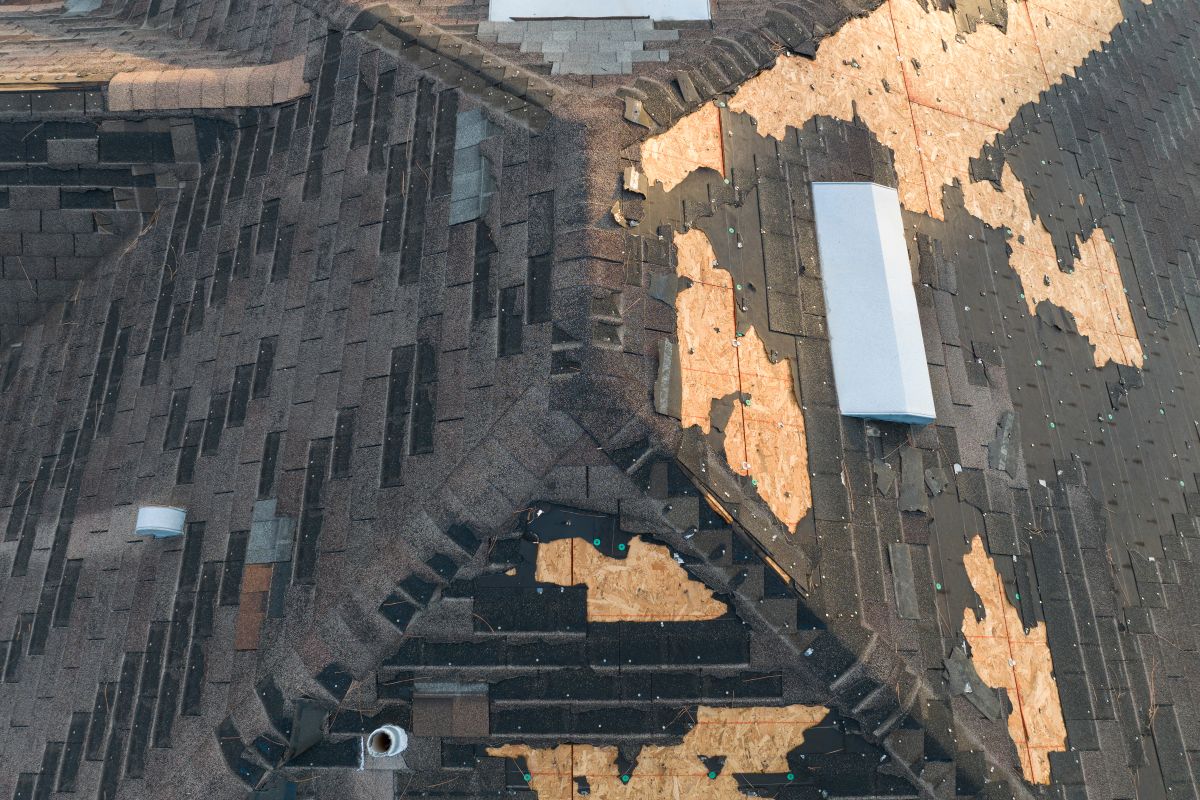
Before any cleanup, temporary repairs, or contractor visits, document every visible sign of damage with timestamped photos and video. Capture all roof slopes from the ground, every visible sign of roof damage including missing or lifted shingles, damaged gutters, soffit and fascia damage, and any interior water staining or roof leak evidence already present. This pre-repair documentation is the foundation of your claim. Insurers increasingly use aerial and satellite imagery to verify damage, and your ground-level documentation needs to be equally detailed to support your case.
2. Apply Temporary Protection to Prevent Further Loss
If the roof has open areas, contact a licensed contractor to install emergency tarping or temporary membrane patches immediately. Temporary protection prevents secondary water damage that the insurer may later argue was caused by delayed action rather than the storm. Document all temporary work with photos before and after. These costs are typically covered as part of an approved claim.
3. Review Your Policy Before Filing
Before calling your insurer, review the key provisions of your homeowners insurance policy. Confirm your deductible type and amount, whether you have RCV (replacement cost value) or ACV (actual cash value) coverage, any specific exclusions that apply to roof claims, and whether your policy includes a separate hurricane deductible. Understanding these terms prevents surprises once the adjuster’s estimate arrives.
4. File Your Claim Promptly
Contact your insurance provider to open the claim as soon as temporary protection is in place. Your insurance agent or carrier representative will open the file and assign a claim number. Provide the storm date, a factual description of the roof damage observed, and confirm that you have documentation ready. Florida law generally requires hurricane claims to be filed within one year of the date of loss and non-hurricane storm claims within two years. Filing promptly and factually, without speculation about cause, is the right approach.
5. Get a Contractor Inspection Before the Adjuster Arrives
This is the single most impactful step most homeowners skip. A licensed roofing contractor experienced in storm damage should conduct a full inspection and produce a written, photographed damage report before the insurance adjuster visits. Insurance adjusters work for the carrier. A pre-claim contractor inspection establishes an independent, documented baseline of the damage that the adjuster must address rather than dismiss. Your contractor should be present during the adjuster’s inspection to ensure all documented damage points are reviewed.
6. Meet With the Insurance Adjuster
Be present for the adjuster inspection or have your contractor there as your representative. Take your own notes and photographs during the visit. If the adjuster finds damage you believe was missed, flag it during the inspection and follow up in writing. The adjuster’s report drives the initial settlement estimate, and any damage not documented during this visit will require a supplemental claim to address later.
7. Review the Estimate and Supplement If Needed

The adjuster’s initial estimate is a starting point, not a final offer. Compare it line by line against your contractor’s scope of work. Supplemental claims add 30 to 60 percent to the original payout when properly documented, according to industry data. If the estimate omits documented damage, uses outdated pricing, or misclassifies damage as wear and tear rather than storm related, your contractor can submit a supplement with supporting photographs, measurements, and current material pricing to close the gap.
8. Complete Permitted Repair Work
Once the settlement is approved and the scope is agreed upon, the repair or replacement work begins. Material selection should align with current Florida Building Code requirements, and roofing materials used in permitted repairs must meet the wind resistance standards for your specific coastal exposure zone. All storm damage roof repair in Florida requires a building permit in most jurisdictions. Permitted work is inspected by the building department and produces a final inspection record that protects your warranty coverage and documents the repair for future insurance renewals. Do not allow a contractor to proceed without pulling the required permits.
9. Close Out the Claim and Collect Documentation
When work is complete, collect the full closeout package: the building permit final inspection record, manufacturer warranty registration, and contractor’s workmanship warranty. If your policy had a recoverable depreciation holdback under an RCV policy, this is also the stage at which you submit proof of completed repairs to recover that withheld amount. A complete documentation package also protects you in the event of a future claim dispute about the repair scope or timeline.
Key Florida Insurance Terms for Roof Claims
Understanding these terms before your claim is filed puts you in a stronger position throughout the process.
| Term | What It Means |
| RCV (Replacement Cost Value) | Pays full repair or replacement cost minus your deductible |
| ACV (Actual Cash Value) | Pays replacement cost minus depreciation: typically lower, especially on older roofs |
| Hurricane deductible | A separate, higher deductible of 2 to 5% of insured value that applies to named storm claims |
| Recoverable depreciation | The withheld depreciation amount on an RCV policy, released when repairs are completed |
| Supplement | A formal request to add scope or adjust pricing after the initial adjuster estimate |
| The 25% rule (SB 4-D) | If a roof meeting 2007-or-newer code sustains less than 25% damage, insurers cover only the damaged portion rather than a full roof replacement |
| Appraisal process | A binding dispute resolution mechanism in Florida policies that brings in a neutral umpire when claim value is contested |
Common Reasons a Roof Damage Claim Gets Denied or Underpaid
Knowing what insurers look for helps homeowners avoid the most common claim pitfalls.
- Damage attributed to poor maintenance or pre-existing wear: If the adjuster can point to poor maintenance or visible wear and tear as the cause rather than the storm event, the claim may be denied or reduced. Pre-storm documentation of roof condition is the best defense against this argument.
- Filing after the deadline: Missing the filing window for a hurricane or storm claim gives the insurer grounds to deny coverage regardless of the damage’s validity.
- Damage below the deductible: The most common denial category in Hurricane Milton data. If the adjuster’s estimate falls below your deductible, no payment is issued even if the entire roof sustained damage across multiple sections. An independent contractor assessment often reveals additional scope that pushes the documented damage above the threshold.
- Unpermitted prior repairs: If a previous repair was done without a permit and the insurer discovers it during the claim, it can complicate coverage for the current damage.
- Roof leak attributed to gradual deterioration: If the insurer determines a roof leak developed over time rather than from a sudden storm event, it may be excluded as a maintenance issue rather than a covered loss. Distinguishing a storm-created opening from a pre-existing leak requires thorough documentation and an experienced contractor assessment.
- No documentation of the storm event: Claims must tie damage to a specific weather event. NOAA storm data and dated documentation from the storm period support the causal link.
Frequently Asked Questions About Roof Insurance Claims

Florida homeowners navigating a roof damage claim for the first time tend to have the same practical questions about timing, documentation, and what to do when things do not go as expected. Here are direct answers to the most common ones.
The timeline varies by claim type and complexity. FLOIR data shows that hurricane and wind damage claims average 90 to 180 days from filing to close. Non-catastrophe roof leak claims average 45 to 75 days. Claims that require supplemental negotiation or involve disputed scope add time. Filing promptly, having complete documentation, and working with a contractor experienced in insurance claims are the best ways to keep the process moving.
Should I get multiple contractor estimates for my roof insurance claim?
You are not required to get multiple estimates for an insurance claim, but getting one thorough estimate from a qualified contractor before the adjuster visit is strongly recommended. The contractor’s assessment provides your documented baseline. Using the lowest contractor bid to satisfy the adjuster’s estimate often results in scope reductions that leave the repair incomplete. The insurer owes you restoration to pre-loss condition, not the cheapest possible patch.
What happens if my roof insurance claim is denied?
A denial is not necessarily final. Review the denial letter carefully to understand the stated reason. Your options include submitting additional documentation to challenge the determination, requesting a re-inspection with your contractor present, filing a supplemental claim if new damage was discovered after the initial inspection, or invoking the appraisal process in your policy to resolve a valuation dispute through a neutral umpire. If the denial involves a coverage dispute rather than a valuation disagreement, a licensed public adjuster or insurance attorney can assess whether the denial was appropriate.
Can filing a roof damage claim raise my homeowners insurance premium?
It can. Florida insurance data shows that filing a single roof damage claim can increase homeowners insurance premiums by 9 to 15% on average. The impact depends on the claim type, the payout amount, and your insurer’s specific policies. Some insurance providers also non-renew policies after a claim, particularly on older roofs. These are real considerations to weigh against the cost of the repair. For minor damage that falls close to your deductible threshold, paying out of pocket may be the better financial decision. For significant storm damage that warrants roof replacement or major repair, filing is almost always the right call.
Quality Roofing Solutions: Claims-Ready Storm Damage Expertise
A roof insurance claim moves faster, lands closer to full value, and avoids the most common denial pitfalls when the roofing contractor behind it knows how to document damage thoroughly and communicate with adjusters effectively. At Quality Roofing Solutions, we have been supporting homeowners through the full roof insurance claim process across northwest Florida for over 20 years: from the pre-adjuster inspection to the final permit closeout.
Schedule your storm damage inspection and let our team build the documentation your claim needs from day one.