 (850) 753-0041


Roof Inspection for Insurance (Why It Matters & What’s Checked)
October 10, 2026
10 minutes Read
A roof inspection for insurance purposes is one of the most financially consequential assessments a Florida homeowner will undergo, and it is also one of the least understood. Most homeowners think of it as a formality required by the insurance company. In practice, the inspection result determines whether your insurance coverage is renewed, what your premium looks like, and whether future insurance claims will be paid or disputed. Understanding what inspectors check and why it matters gives you the information you need to prepare your roof before the insurer sends someone out. If your roof needs professional attention ahead of an insurance inspection, our get your roof inspection-ready team can help. Here is what we cover:
- Why roof inspections have become more important in Florida’s 2026 insurance market
- The 7 areas checked during a roof inspection for insurance
- The difference between a 4-point inspection, wind mitigation inspection, and roof certification
- What inspection results mean for your coverage and premium
- Frequently asked questions homeowners commonly ask
Why Roof Inspections Matter More in Florida’s 2026 Insurance Market

Florida’s insurance market has placed roofs at the center of coverage decisions more than any other structural component. Florida homeowners without claims are paying an average of $10,384 annually according to Lewis Insurance, and roof condition is one of the primary levers insurance providers use to justify premium levels, coverage restrictions, and non-renewals.
According to Lewis Insurance citing Florida Statute 627.7011, insurers cannot deny or non-renew a homeowners policy solely because the roof is less than 15 years old, and if the roof is 15 years or older, an authorized inspector certifying at least 5 more years of remaining useful life prevents the insurer from denying coverage based on age alone. That protection only holds when the inspection is performed and documented. Without a recent inspection report, homeowners with older roofs have no legal shield against age-based non-renewal.
We’re proud to serve home and business owners in Freeport, FL, and nearby Walton and Okaloosa County communities with roofing services that prepare your roof for insurance scrutiny and produce the documentation you need.
Types of Roof Inspection for Insurance in Florida
Before getting into what inspectors check, it is worth understanding which type of inspection your situation calls for. Insurance roof inspections in Florida come in three distinct formats, and each serves a different purpose.
- 4-point inspection: Required by most carriers on homes over 20 to 25 years old before issuing a new policy. It covers four systems, roof, electrical, plumbing, and HVAC, and produces a pass/fail assessment that determines eligibility for coverage. The roof portion confirms approximate age, condition, and material type.
- Wind mitigation inspection: Uses the OIR-B1-1802 uniform form to document wind-resistant features including roof shape, deck attachment method, roof cover material and product approval, roof-to-wall connections, and secondary water resistance. Results are submitted to the insurer and can produce meaningful premium discounts. Florida law requires insurers to offer wind mitigation credits per §627.0629.
- Roof certification or remaining useful life inspection: Used specifically when a roof is over 15 years old and the insurer is questioning coverage eligibility. A licensed inspector certifies that the roof has a minimum of 5 more years of useful life remaining. This certification is the legal mechanism that prevents an insurer from denying coverage solely on the basis of age.
7 Areas Checked During a Roof Inspection for Insurance
Insurance-related roof inspections are more structured than a standard condition inspection. Here is what a qualified inspector evaluates at each stage.
1. Roof Age and Documentation
The inspection begins with confirming the roof’s age from permits, contractor records, or visual dating of materials and weathering patterns. Florida law calculates roof age from the last date on which 100 percent of the roof surface area was replaced under a building permit. Partial re-roofing does not reset the clock, which surprises many homeowners who had significant section work done but not a full replacement.
- What inspectors check: Permit records, contractor documentation, material condition consistent with stated age
- Why it matters: Age determines which inspection type applies and whether the 15-year coverage protection is in play
2. Roofing Material and Product Approval
The material type affects both the inspection outcome and the premium. Inspectors confirm the roofing material and, in many cases, verify that it carries a valid Florida Product Approval number. Metal roofing, concrete tile, and clay tile carry favorable ratings for durability and wind resistance, while aging 3-tab asphalt shingles are the material most likely to trigger coverage concerns.
- What inspectors check: Material type, manufacturer, approximate age, any mixed materials from prior repairs
- Why it matters: Product approval numbers are required for post-storm claims and can affect wind mitigation credit eligibility
3. Overall Condition and Remaining Useful Life
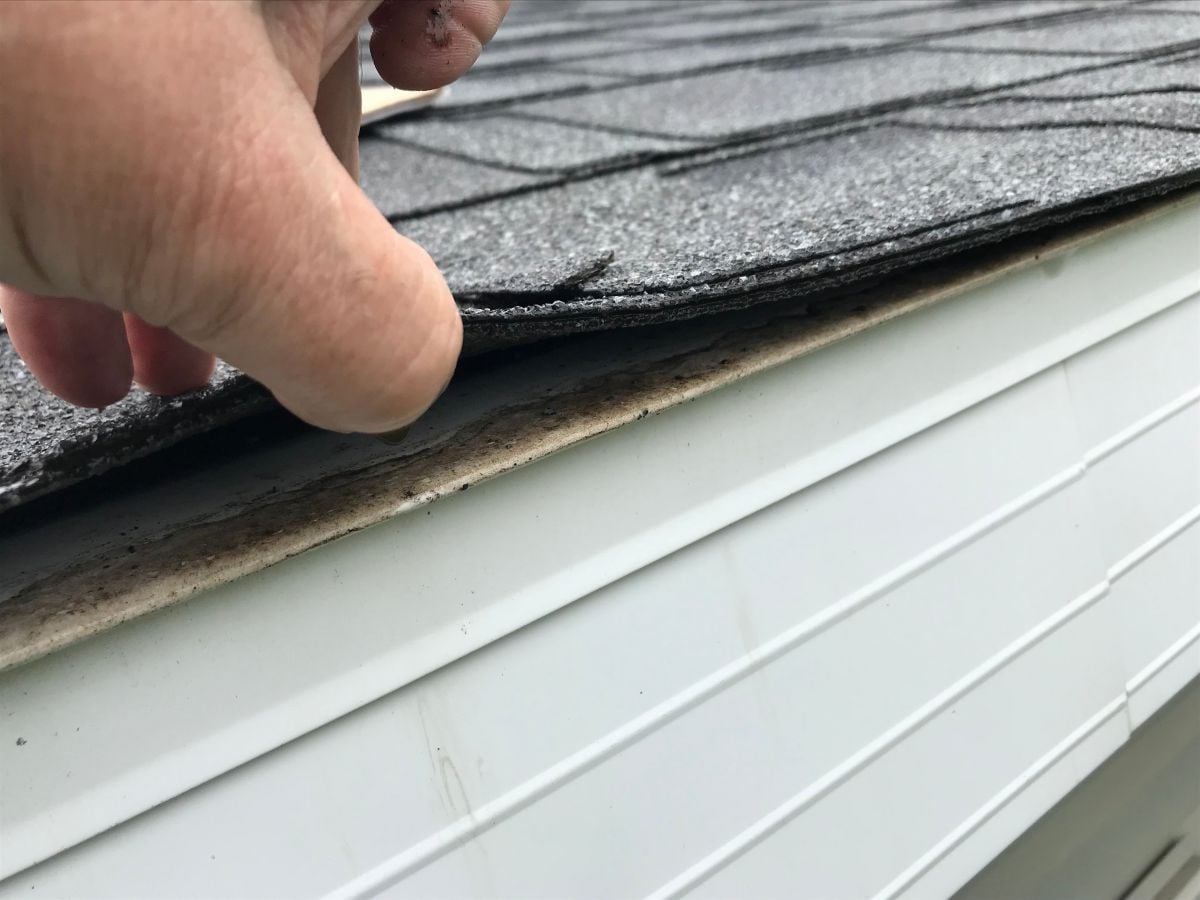
This is the core assessment in a roof certification inspection. The inspector evaluates granule loss on asphalt shingles, visible cracking or brittleness, algae and moss penetration, evidence of prior repairs, and any signs of active or historic water intrusion from the attic side. The conclusion is a professional opinion on remaining useful life, expressed in years.
- What inspectors check: Surface condition across all slopes, granule loss patterns, sealant strip integrity, evidence of prior repairs
- Why it matters: A certification of 5 or more years of remaining life is the legal standard under Florida Statute 627.7011 for preventing age-based denial
4. Roof Deck Attachment
Deck attachment is one of the most consequential elements in a wind mitigation inspection. The Florida OIR form classifies deck attachment by nail type and spacing, with better-attached decks earning significantly higher wind mitigation credits. The inspector accesses the attic to observe the fastener pattern at the roof deck.
- What inspectors check: Nail type (6d, 8d, or ring-shank), nail spacing (6-inch, 6/12-inch pattern, or other), deck material and thickness
- Why it matters: Deck attachment classification directly determines the wind mitigation credit amount, which can reduce annual premiums by hundreds of dollars
5. Roof Shape Classification

The wind mitigation form classifies roof shape as hip, gable, or other. A fully hipped roof, where all four sides slope to the eave with no exposed gable end walls, receives the highest favorable classification. Gable roofs score lower. Mixed rooflines are classified based on the percentage of each shape present.
- What inspectors check: Roofline geometry as observed from the exterior, presence and size of any gable end walls
- Why it matters: Roof shape classification is a significant driver of wind mitigation credits, and a hip roof can produce a meaningfully lower premium than an equivalent gable roof
6. Secondary Water Resistance
Secondary water resistance, sometimes called a sealed roof deck, is the presence of a self-adhering peel-and-stick underlayment applied over the full deck surface rather than just the eaves, and it is the wind mitigation feature with the largest single premium impact for many Florida homeowners. Inspectors verify its presence from the attic by checking for the foil or rubberized surface on the underside of the deck sheathing.
- What inspectors check: Presence of qualifying secondary water resistance product on the full deck surface, or at eaves only, or none
- Why it matters: Full secondary water resistance certification produces the largest single credit available in the wind mitigation form for most Florida homeowners
7. Roof-to-Wall Connections
The strength of the connection between the roof framing and the exterior walls determines how well the roof assembly resists uplift during high-wind events. A detailed roof inspection report documents the connection type at each rafter or truss: toenail only (weakest), single wraps, double wraps, or structural clips. Homes built before the 2002 Florida Building Code update frequently have only toenailed connections.
- What inspectors check: Connector type, number of fasteners per connection, coverage of connectors across the full perimeter
- Why it matters: Stronger roof-to-wall connections produce higher wind mitigation credits and reflect the genuine structural difference in wind resistance between pre- and post-2002 construction
What Inspection Results Mean for Your Coverage and Premium
| Inspection Result | Coverage Impact | Premium Impact |
| Roof under 15 years old, sound condition | No age-based restriction allowed | Standard rating |
| Roof 15-plus years, 5-plus years useful life certified | Coverage cannot be denied based on age | May improve on prior if roof documented as sound |
| Roof 15-plus years, less than 5 years certified | Insurer may restrict or non-renew | Higher rating or non-renewal |
| Hip roof shape documented | No coverage impact | Favorable wind mitigation credit |
| Secondary water resistance confirmed | No coverage impact | Largest single premium credit available |
| Deck attachment upgraded | No coverage impact | Meaningful premium reduction |
| Poor condition overall | Possible non-renewal | Higher rating or non-renewal |
Frequently Asked Questions About Roof Inspections for Insurance
Florida homeowners preparing for or responding to an insurance-related roof inspection tend to ask the same questions. Here are direct answers.
Who can perform a roof inspection for insurance in Florida?
Under Florida law as updated by SB 808 effective July 1, 2026, any qualified roof inspector can perform the assessment, including licensed home inspectors, certified building code inspectors, licensed general or residential contractors, licensed roofing contractors, professional engineers, and professional architects. For wind mitigation inspections specifically, the inspector must be authorized to complete the OIR-B1-1802 form. For a 4-point inspection, any licensed inspector or contractor can typically complete the roof portion.
Can I fail a roof inspection for insurance and still keep my coverage?
It depends on the reason for the failing assessment. If the roof is under 15 years old, Florida law protects you from non-renewal based solely on condition assessments that are not tied to specific documented deficiencies. If the roof is over 15 years old and cannot be certified for 5 or more years of remaining useful life, the insurer may non-renew, restrict coverage, or apply a RSPS (Roof Surface Payment Schedule) depreciation provision. In that situation, a roof replacement or significant repair may restore coverage eligibility.
How do I prepare my roof before an insurance inspection?
Scheduling your own roof inspection before the insurer sends someone out gives you the opportunity to address issues on your terms. Getting the roof inspected by your own contractor first means you control what gets fixed before it becomes a finding on the insurer’s report. The most impactful steps are cleaning moss and algae from the surface, clearing gutters and downspouts, replacing any cracked or lifted shingles, resealing visible pipe boot or flashing failures, and having documentation of past repairs and the original installation permit available for the roof inspector. A professional roof inspection by a licensed roofing contractor identifies any items likely to produce a concerning finding before the insurer’s roof inspector arrives.
How much does a roof inspection for insurance cost in Florida?
A 4-point inspection typically costs $150 to $250 for a residential property. A wind mitigation inspection runs $75 to $150 and often pays for itself within the first year through premium credits. A standalone roof certification inspection for a roof over 15 years old runs $150 to $350 depending on roof size and complexity. Some roofing contractors include a basic inspection as a free service when the homeowner is also considering repair or replacement work. Insurance agents can advise on which inspection type your carrier requires and whether a recent wind mitigation report is already on file.
How often should I get a roof inspection for insurance purposes in Florida?
For roofs under 10 years old, the wind mitigation inspection completed at installation or shortly after is typically sufficient until the policy is renewed with a carrier that requests updated documentation. For roofs approaching 15 years, an annual inspection is advisable to track remaining useful life. After 15 years, annual inspections help maintain certification and give the homeowner early warning of any condition that could affect coverage at the next renewal.
Quality Roofing Solutions: Inspection-Ready Roofs Across Northwest Florida

A roof inspection for insurance is most favorable when the roof has been maintained, its documentation is in order, and any developing issues have been addressed before the inspector arrives. Among roofing companies in Northwest Florida, Quality Roofing Solutions has been preparing roofs for insurance scrutiny for over 20 years. We conduct thorough pre-inspection assessments, identify items that are likely to concern an insurance inspector, complete any needed repairs, and produce documentation that supports your coverage position.
See what your roof will show before the insurer does and go into your next insurance inspection with confidence in what the inspector will find.