 850-753-0041


How Long Does a Roof Last in Florida? (By Material)
September 29, 2026
10 minutes Read
How long does a roof last in Florida is one of the first questions homeowners ask when a roof starts showing its age, and the honest answer is shorter than most people expect. Florida roofs work harder than roofs almost anywhere else in the country. Intense UV radiation, year-round heat cycling, coastal humidity, and annual storm season all accelerate the deterioration of roofing materials beyond what manufacturer ratings or national averages suggest. If you want an honest assessment of whether your roof needs a new roof or still has serviceable life remaining, our team offers free roof inspections across northwest Florida. Here is what we cover:
- Why Florida roofs age faster than national averages
- How long each of the 5 main roofing materials lasts in Florida
- The factors that shorten or extend any roof’s lifespan here
- Warning signs your roof is approaching end of life
- Frequently asked questions homeowners commonly ask
Why Florida Roofs Age Faster Than National Averages

Manufacturer warranties and national roofing guides quote lifespans for conditions that Florida rarely provides. A 30-year shingle in Minnesota is exposed to less UV radiation in a full year than a Florida shingle absorbs in six months. Even the best materials, installed correctly and to current code, fall short of their rated lifespans here without proactive maintenance. Understanding why the state is so demanding on roofing materials helps homeowners set realistic expectations and plan accordingly.
According to Best Florida Roofing, asphalt shingles last about 15 to 20 years in Florida versus 25 to 30 years in milder climates, and tile roof underlayment, which does the actual waterproofing work beneath tile, often needs replacing around year 20 to 25 even when the tile itself is still intact. Those gaps from national averages trace directly to four compounding Florida-specific stressors.
- UV intensity: Florida receives more annual UV radiation than nearly any other state. UV breaks down the oils in asphalt binders, making shingles brittle, prone to cracking, and unable to shed water effectively. South-facing and west-facing slopes age measurably faster than north-facing slopes on the same home.
- Thermal cycling: Roof surface temperatures in Florida can swing from 70 degrees before dawn to over 160 degrees by mid-afternoon. This daily expansion and contraction fatigues fasteners, sealants, and seam bonds over years of cycling, particularly at penetrations and flashing transitions.
- Humidity and rainfall: Florida’s ambient humidity promotes algae, moss, and mold growth on shingle surfaces. Moisture that penetrates any compromised area accelerates rot in the roof deck and reduces insulation performance, creating secondary damage that compounds the primary material wear.
- Coastal salt air: Properties within a few miles of the Gulf or Atlantic experience salt-laden air that corrodes metal fasteners, flashing, and HVAC components on the roof surface. The closer to the water, the faster corrosion initiates on any exposed metal element of the roofing system.
We’re proud to serve home and business owners in Milton, FL, and nearby Santa Rosa County communities with honest roof assessments and honest answers about where their roof actually stands.
5 Roofing Materials and How Long They Last in Florida
Every Florida homeowner should know the realistic service life of their roofing material, not the manufacturer’s best-case estimate, before making decisions about repair versus replacement.
1. Asphalt Shingles
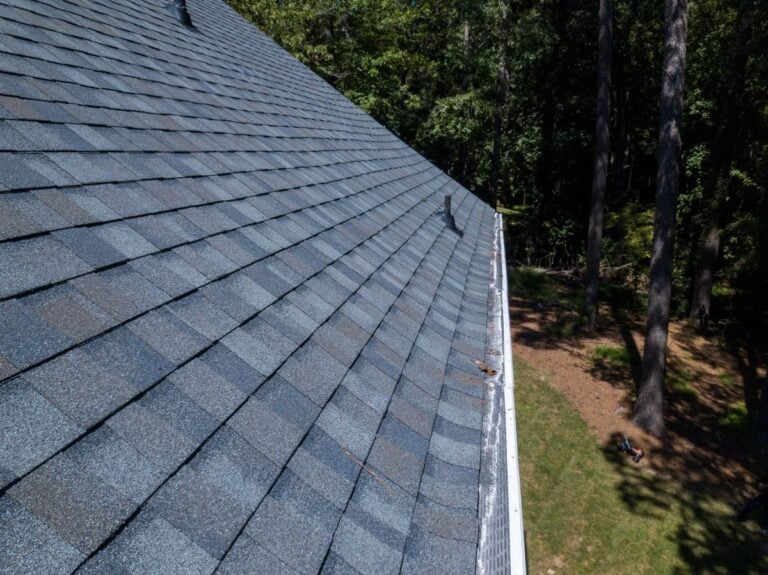
Asphalt shingles are the most popular roofing material in Florida and the most common choice for new roof installations due to their affordability and ease of installation, but they are also the material most affected by Florida’s climate gap. Where architectural shingles might reach 25 to 30 years in a mild northern climate, Florida conditions typically compress that to 15 to 22 years for inland properties and 13 to 18 years for coastal homes within a few miles of saltwater.
- Realistic Florida lifespan: 15 to 22 years inland, 13 to 18 years coastal
- What shortens it: UV degradation of the sealant strip, algae growth, inadequate attic ventilation baking the underside, and wind events that crack aged shingles
- What extends it: Proper attic ventilation, annual inspections, prompt repair of any lifted or cracked shingles, and algae-resistant shingles in shaded or humid environments
2. Metal Roofing
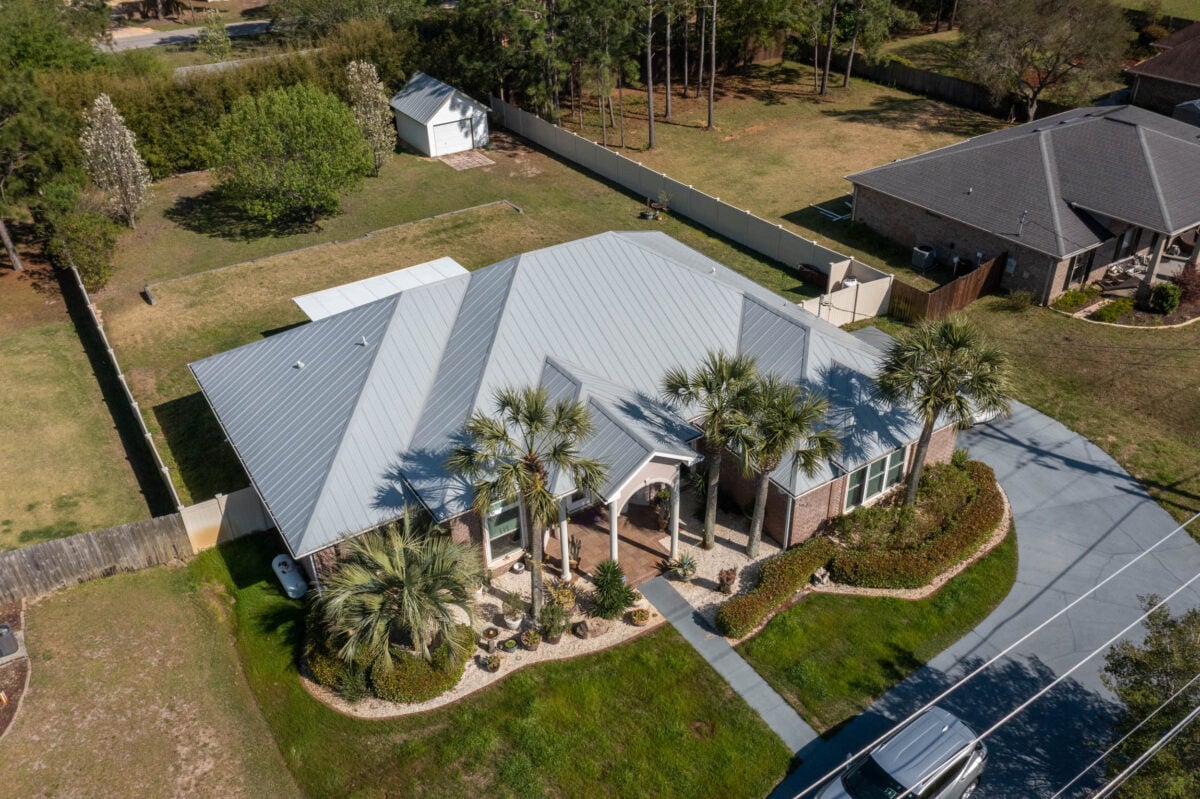
Metal roofing significantly outlasts asphalt in Florida’s climate and also delivers meaningful energy efficiency benefits through its reflective surface, which reduces cooling loads during Florida’s long warm season. The gap in both lifespan and energy efficiency between metal and asphalt is wider here than almost anywhere else in the country. Standing seam metal systems are the top performer, with lifespans of 40 to 60 years in Florida inland conditions. Coastal aluminum standing seam systems approach 50 to 70 years due to aluminum’s superior salt corrosion resistance. Exposed fastener metal systems like 5V crimp have shorter realistic lifespans of 30 to 45 years because the neoprene washers at each fastener point degrade with age.
- Realistic Florida lifespan: 30 to 70 years depending on system type and proximity to salt water
- What shortens it: Poor coating quality, salt air on steel systems without adequate protection, and fastener degradation on exposed fastener systems
- What extends it: PVDF-coated panels, aluminum specification within two miles of the coast, and periodic inspection of fastener conditions on exposed fastener systems
3. Concrete and Clay Tile
Tile roofing is a signature material of Florida residential architecture, and for good reason. The tiles themselves are extremely durable, clay tile installed 50 or 70 years ago is still performing on many Florida homes. But the tile is only half the system. The waterproof underlayment beneath the tile does the actual work of keeping water out, and it wears out decades before the tile does. Most Florida tile roof projects at the 20 to 25-year mark are not about tile replacement but underlayment replacement, which requires removing and resetting the tiles over new underlayment.
- Realistic Florida lifespan: Tile 50 to 100-plus years; underlayment 20 to 30 years
- What shortens underlayment: Heat transfer through unventilated attic spaces, cracked or broken tile that allows direct UV and moisture exposure to the underlayment below
- What extends it: Peel-and-stick underlayment specified at installation, whole-house attic ventilation, and prompt replacement of broken or slipped tiles
4. Flat Roof Systems (TPO, EPDM, Modified Bitumen)

Flat and low-slope roofing systems face a different set of durability challenges than sloped residential systems. Ponding water, which no flat roof system was designed to carry indefinitely, is the most common accelerator of premature failure. The membrane material itself is only as good as the drainage design and maintenance program around it.
- Realistic Florida lifespan: TPO and EPDM: 15 to 25 years with proper maintenance; modified bitumen: 15 to 20 years
- What shortens it: Ponding water, failed flashing at penetrations and parapets, UV degradation of surface coatings without re-coating maintenance
- What extends it: Proper drainage design, annual drain clearing, infrared moisture surveys every five years, and timely coating restoration before the membrane surface fails
5. Wood Shake and Built-Up Roofing (BUR)
Wood shake is rarely installed on new Florida homes given its fire risk and poor performance in humid climates, but it exists on many older properties. Built-up roofing remains common on commercial flat roof applications. Both materials perform at the lower end of lifespan expectations in Florida’s heat and humidity environment.
- Wood shake realistic lifespan: 10 to 20 years in Florida, heavily dependent on ventilation and algae management
- Built-up roofing (BUR) realistic lifespan: 15 to 25 years depending on ply count and maintenance
- What shortens them: Humidity, algae, moss, inadequate ventilation for wood shake; ponding water and surface erosion for BUR
- What extends them: Regular cleaning and fungicide treatment for wood shake; gravel replacement and surface recoating for BUR
Florida Roof Lifespan at a Glance
| Material | Realistic Florida Lifespan | National Average (Comparison) |
| 3-Tab Asphalt Shingles | 12 to 17 years | 20 to 25 years |
| Architectural Shingles | 15 to 22 years | 25 to 30 years |
| Standing Seam Metal | 40 to 60 years | 40 to 70 years |
| Exposed Fastener Metal | 30 to 45 years | 30 to 50 years |
| Concrete Tile (underlayment) | Tile 50-plus; underlayment 20 to 25 | Tile 50-plus; underlayment 25 to 30 |
| Clay Tile (underlayment) | Tile 50 to 100-plus; underlayment 20 to 25 | Tile 75 to 100-plus |
| TPO / EPDM Flat Roof | 15 to 25 years | 20 to 30 years |
| Modified Bitumen | 15 to 20 years | 15 to 25 years |
| Wood Shake | 10 to 20 years | 20 to 30 years |
Warning Signs Your Florida Roof Is Approaching End of Life
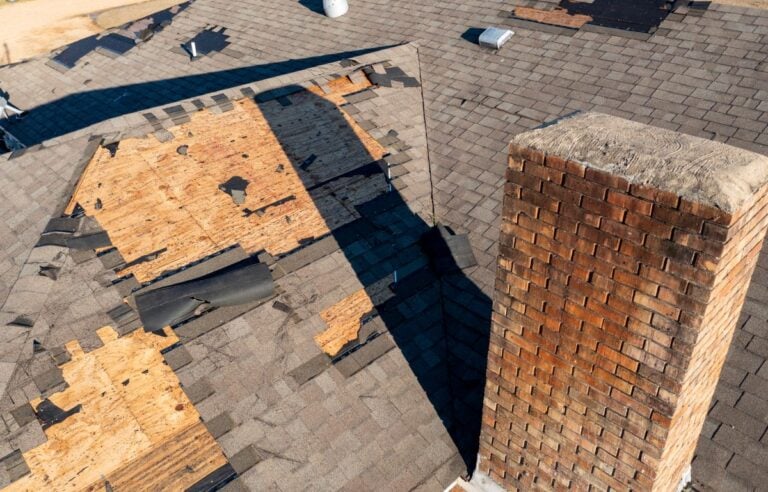
Age is only half the picture. Roof life is determined by condition as much as calendar years, and these conditions signal that the roofing system is failing regardless of how old it is.
- Granule loss on shingles: Heavy granule accumulation in gutters or bare patches on shingle surfaces indicate the protective layer is depleted.
- Curling or cupping shingles: Edges turning up or centers bowing indicate moisture imbalance or heat degradation in the shingle material.
- Cracked or slipping tiles: Individual tile repair is appropriate for isolated breaks, but widespread cracking or tiles sliding out of position indicates underlayment failure.
- Water staining on ceilings: Any interior staining above the ceiling plane signals active water intrusion that warrants immediate professional inspection.
- Daylight visible from the attic: Light entering through the roof deck means water can too.
- Repeated repairs at the same locations: A roof that has required three or more repairs at the same flashing point or valley is telling you the system has failed in that area.
- Algae streaking across all slopes: Widespread black streaking indicates moisture retention and surface degradation that accelerates material failure.
Frequently Asked Questions About Roof Lifespan in Florida

Florida homeowners planning ahead for roof replacement tend to ask the same questions. Here are direct answers to the most common ones.
How do I find out how old my roof is?
The most reliable sources are the original building permit, which is on file with the county building department, or the property appraiser’s records for your county, which typically list the year major components like the roof were last updated. Your homeowners insurance policy may also reference the roof age based on the last inspection. If documentation is unavailable, a professional roof inspection can estimate age from the material condition, granule pattern, and weathering characteristics visible during inspection.
Does Florida insurance require a certain roof age?
Many Florida homeowners insurance carriers scrutinize roofs older than 15 to 20 years when writing or renewing coverage. Some carriers require a roof inspection documenting remaining useful life for roofs in that age range, and others may non-renew policies on roofs past a certain age threshold. Roofs with documented wind mitigation features typically receive more favorable treatment. Confirm the specific requirements with your carrier before your next renewal.
How much does it cost to replace a roof in Florida?
Roof replacement cost in Florida varies significantly by material, roof size, and complexity. Architectural shingles typically run $10,000 to $18,000 for a standard 2,000-square-foot home. Standing seam metal runs $25,000 to $50,000 for the same size. Tile replacement ranges from $20,000 to $50,000 or more depending on tile type and whether the deck and underlayment require replacement. Labor costs in northwest Florida’s coastal markets reflect both the skilled workforce requirements and local building codes compliance demands. Every permitted re-roofing project must meet current Florida Building Code wind resistance and product approval standards, which affect both material selection and installation method.
Is it worth repairing a 15-year-old roof in Florida?
It depends on the scope and cost of the repair relative to the remaining service life. A $500 pipe boot replacement on a 15-year-old architectural shingle roof with no other issues is a reasonable investment. A $3,000 repair on a 17-year-old coastal shingle roof with widespread granule loss and two active leak points is likely the beginning of a series of repairs that add up to more than a replacement would cost. A professional inspection that honestly assesses remaining useful life is the most cost-effective first step.
Quality Roofing Solutions Knows Florida Roofs
Florida’s climate does not give roofs the benefit of the doubt, and neither should Florida homeowners. Understanding what your roof is made of, how old it is, and what condition it is actually in puts you in the best position to make smart decisions about repair, replacement, and timing. At Quality Roofing Solutions, we have been providing honest roof assessments and quality installations across northwest Florida for over 20 years. We give homeowners straight answers about where their roof stands, not the answer that sells the most work.
Schedule your free roof inspection today and find out exactly how much life your roof has left.