 (850) 753-0041


Gutter Installation (How It Works & Choosing the Right Pro)
August 27, 2026
10 minutes Read
Most homeowners think about rain gutters only when something goes wrong: an overflowing channel in a rainstorm, a stain on the siding, or a soggy patch of yard that never quite dries out. But gutter installation is one of the most consequential protective investments a Florida homeowner can make, and getting it right from the start prevents the foundation, fascia, siding, and landscaping damage that poor or absent rain gutters quietly cause over time. If you are considering gutter installation for your home, this guide covers what the process actually looks like and how to choose the right contractor. Here is what we cover:
- Why gutter installation matters more in Florida than most homeowners realize
- The step-by-step rain gutter installation process
- How to compare gutter materials and sizes
- What to look for when choosing a gutter installation contractor
- Frequently asked questions homeowners commonly ask

Why Gutter Installation Is a Serious Investment
A gutter system does one job: collect roof runoff and move it away from the structure. When it does that job well, most homeowners never think about it. When it fails, or was never installed correctly, the consequences accumulate slowly and become expensive.
According to a study reported by LeafFilter, 40 percent of homeowners have already suffered damage to their homes from clogged or failing gutters, including foundation cracks, basement flooding, and eroded landscaping. In Florida, where rainfall volumes are among the highest in the continental U.S. and the wet season delivers concentrated, intense storms, that damage risk is even higher than the national figure suggests. Beyond foundation damage, failing rain gutters contribute directly to soil erosion around the home perimeter, washing away the topsoil and grade that keeps water flowing away from the structure rather than toward it. A gutter system that is undersized, improperly pitched, or poorly fastened to the fascia will fail to protect the home under exactly the conditions when protection matters most.
We’re proud to serve home and business owners in Niceville, FL, and nearby Okaloosa County communities with gutter installation services that are sized, sloped, and secured for Florida’s rainfall demands.
6 Steps In The Gutter Installation Process
Professional gutter installation follows a defined sequence. Each step affects how the system performs over its lifetime; a gutter installed without proper pitch or with inadequate hanger spacing will fail regardless of material quality.
1. Site Assessment and Measurement
The installer evaluates the home’s roofline, existing fascia condition, and drainage situation before any material is ordered or cut. Key items assessed include:
- Roofline length: Total linear footage of gutter run at each eave determines material quantities
- Fascia condition: Rotted or damaged fascia must be repaired before gutters are attached; fastening to compromised wood produces a system that will pull away from the structure over time
- Downspout placement: Optimal discharge locations are determined based on foundation grade, landscaping, and local drainage patterns
- Chalk line layout: A chalk line is snapped along the fascia to mark the exact slope path before any brackets go up, typically 1/4 inch of drop per 10 feet of run, ensuring consistent drainage toward downspouts without visible sag
- Downspout location: Optimal downspout location is determined based on foundation grade, landscaping, and local drainage patterns before fabrication begins
2. Material Selection and Fabrication
For seamless aluminum gutter installation, the most common and recommended choice for Florida homes, a roll-forming machine is brought on-site and fabricates gutters to the exact length of each run from a continuous coil of aluminum. This eliminates the seam joints where sectional gutters most commonly fail. Key selection decisions include:
- Width: 6-inch gutters are strongly recommended over 5-inch for Florida’s high-volume rainfall events
- Gauge: 0.032-inch aluminum is standard residential; 0.027-inch is thinner and less durable over time
- Color: Gutters are factory-colored to match or complement fascia and trim, with dozens of standard options available
- Downspout size: 3×4-inch rectangular downspouts handle higher volume than 2×3-inch and are recommended for 6-inch gutter systems
3. Fascia Preparation
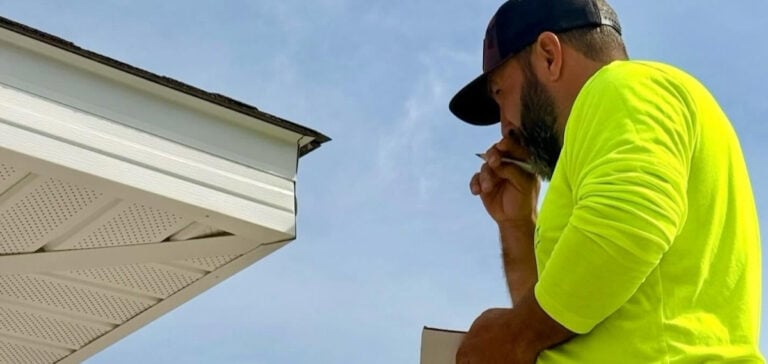
Before gutters go up, the installer inspects the fascia board and exposed rafter tails at close range, addressing any soft spots, rot, or detached sections. Rafter tails that have deteriorated behind the fascia can compromise gutter attachment points even when the fascia face looks acceptable, a detail that requires close inspection rather than a quick visual pass. Any existing drip edge that terminates incorrectly, directing water behind the gutter rather than into it, is adjusted or replaced. This prep step is often skipped by lower-quality installers but determines whether the gutter system stays securely attached through years of Florida storm seasons.
4. Hanger Installation
Gutters are secured to the fascia using hidden hanger brackets; stainless steel screws are driven through a screw mounting hole in each bracket and into the fascia and rafter tail behind it. Stainless steel screws are specified over standard zinc-plated fasteners because they resist corrosion in Florida’s coastal humidity for the full life of the system. Hangers should be placed every 18 to 24 inches, with tighter spacing at joints and corners. In Florida’s high-wind environment, hanger spacing matters: gutters that pull away from the fascia during a storm become projectiles and leave the roofline unprotected at exactly the wrong moment.
5. Gutter and Downspout Installation
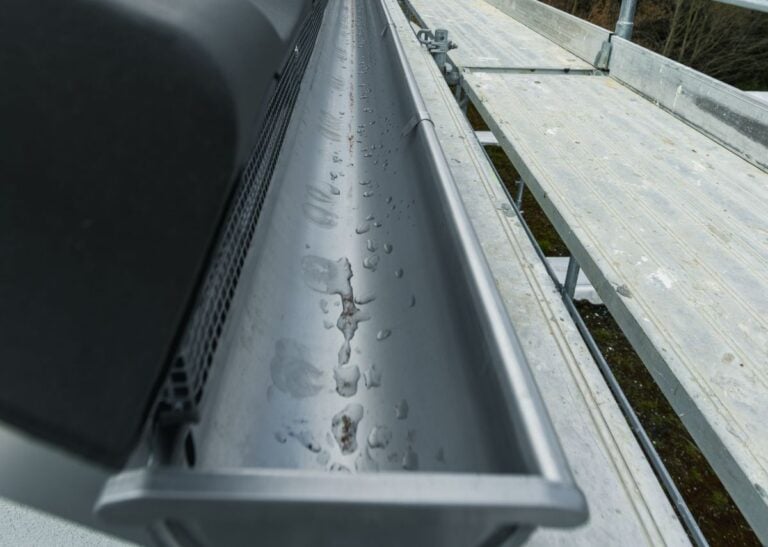
With hangers in place and pitch confirmed, the fabricated gutter sections are lifted and snapped into the hanger brackets along the fascia. End caps are sealed, inside and outside mitered corners are applied, and downspout outlets are cut into the gutter bottom at each confirmed downspout location. Downspout sections are assembled using sheet metal screws at each joint and attached to the exterior wall with fascia brackets secured every six feet, terminating with an elbow that directs water at least four to five feet from the foundation perimeter to prevent soil erosion and foundation saturation.
Key installation details include:
- Sealant at all joints: End caps, miters, and outlet collars are sealed with gutter sealant rated for outdoor temperature cycling
- Downspout straps: Attached every six feet along the wall run to prevent movement during high-wind events
- Splash blocks or extensions: Installed at each downspout termination to direct flow away from the foundation on flat or low-grade lots, preventing soil erosion at the discharge point
6. Final Inspection and Water Test
A quality installer performs a water test before leaving the site, running water through the system with a hose to confirm consistent flow, no leaks at joints, no pooling in the gutter channel, and correct discharge at every downspout. Any low spots that cause standing water are adjusted. The homeowner should be present for the water test or receive photographic documentation confirming the system’s performance before the crew leaves.

Gutter Material and Size Comparison
Not all gutter materials perform equally in Florida’s climate. Here is how the main options compare.
| Material | Lifespan | Florida Suitability | Cost Range |
| Seamless aluminum (6-inch) | 20-30 years | Excellent — lightweight, rust-resistant, wide color range | $$ |
| Copper | 50+ years | Excellent — develops patina, premium aesthetic | $$$$ |
| Galvanized steel | 15-20 years | Good — heavier, can rust at cut edges over time | $$ |
| Vinyl sectional | 10-15 years | Poor — degrades in UV and heat, cracks in high wind | $ |
| Sectional aluminum | 15-20 years | Fair — seam joints are the limiting factor in Florida’s rainfall | $ |
For most Florida homeowners, seamless aluminum in a 6-inch profile is the clear choice. It handles Florida’s rainfall volume, resists corrosion without maintenance, holds color well under UV exposure, and carries a reasonable cost relative to its service life.
What to Look for in a Gutter Installation Contractor
Gutter installation looks simple from the outside, but the details, pitch, hanger spacing, fascia prep, and downspout placement determine whether the system actually protects the home or simply adds a decorative channel to the roofline.
- On-site fabrication: A contractor who brings a roll-forming machine and fabricates seamless gutters on-site is providing a meaningfully superior product to one who installs pre-cut sectional pieces
- Written estimate: The estimate should specify gutter width, gauge, hanger spacing, downspout size and count, and any fascia repair work included in the scope
- Fascia inspection: Any contractor who does not inspect or address fascia condition before installation is cutting a step that will cost the homeowner later
- Water test: Confirm the contractor performs a water test before completing the job; this is the only way to verify the system works before the next rain event
- Florida license and insurance: Verify a valid contractor license and general liability coverage before signing anything
Frequently Asked Questions About Gutter Installation
Homeowners preparing for a gutter installation tend to have the same practical questions. Here are direct answers to the most common ones.
How long does gutter installation take?
A standard gutter installation on a single-family Florida home typically takes one day from setup to water test. Larger homes with complex rooflines, significant fascia repair work, or multiple stories may take two days. Gutter installation does not require a building permit in most Florida jurisdictions, which means there is no permitting delay between scheduling and installation.
How much does gutter installation cost in Florida?
Seamless aluminum gutter installation in Florida typically runs between $8 and $14 per linear foot fully installed, including downspouts. A typical 150-linear-foot system on a mid-size Florida home runs $1,200 to $2,100. Copper gutters run significantly higher: $25 to $40 per linear foot or more. Fascia repair, gutter guard installation, and underground downspout drainage add to the base cost. The variation in quotes between contractors often reflects differences in material gauge, hanger spacing, and whether fascia prep is included.
Should I get gutter guards installed at the same time?
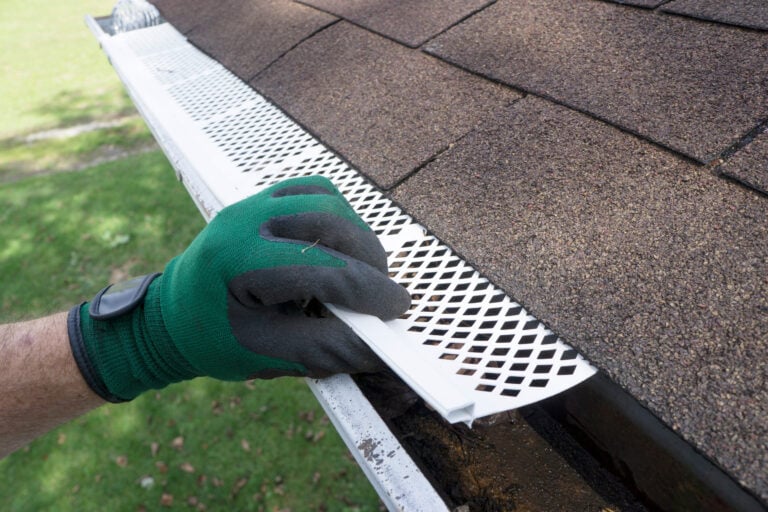
Installing gutter guards at the time of new gutter installation is the most cost-effective approach; guards are easier and less expensive to install on a new system than to retrofit onto an existing one. Florida homeowners with significant tree coverage benefit meaningfully from quality gutter guards that reduce cleaning frequency. Micro-mesh style guards that filter fine debris while allowing high-volume water flow are the most effective option for Florida’s rainfall rates and organic debris load from live oaks and palms.
When does gutter replacement make more sense than repair?
Gutters that are pulling away from the fascia at multiple points, showing visible rust or corrosion along the channel, sagging between hangers, or leaking at multiple seam joints are better candidates for full replacement than ongoing repair. Sectional gutters that have been repaired repeatedly at the same seam points are a particularly strong replacement candidate; each repair adds sealant over a joint that will continue to flex and fail. A professional inspection clarifies whether the existing system has remaining service life or whether a new seamless installation is the more cost-effective path forward.

Quality Roofing Solutions: Gutter Installation Done Right
Gutter installation is a detail that separates a home that manages water correctly from one that lets it accumulate where it does the most damage. At Quality Roofing Solutions, we install seamless rain gutters across northwest Florida that are sized for Florida’s rainfall, secured for Florida’s wind exposure, and sloped correctly from the start. We inspect fascia, we perform water tests, and we give homeowners a system that actually works, not just one that looks like it should.
Contact our team today to schedule your free gutter assessment and get a detailed estimate on what the right gutter installation looks like for your specific home.