 (850) 777-0961


5 Best Gutter Guards for Florida Homes (Ranked & Reviewed)
October 13, 2026
10 minutes Read
Finding the best gutter guards for a Florida home is a different exercise than picking from a national “best of” list. Most gutter guard rankings are built around deciduous leaf debris in northern climates. Florida homeowners face a completely different debris profile: slash pine needles that thread through standard mesh openings, live oak catkins that mat and pack into any gap, palm fronds, pollen, roof grit, and seed pods from subtropical vegetation. Add salt air corrosion, daily UV bombardment, and summer storms that deliver inches of rain in an hour, and a guard that earns top marks in Boston may fail within a season in Fort Walton Beach. The goal is simple: the right gutter guard stops clogged gutters before they cause water damage without becoming a maintenance problem of their own. This guide ranks gutter guards specifically for Florida conditions. If you want an expert opinion on which system fits your home, our team handles gutter guard installation across the Florida Panhandle. Here is what we cover:
- Why Florida gutter guard selection differs from the rest of the country
- The 5 best gutter guard types for Florida homes, ranked
- How to match guard type to your specific debris environment
- What professional installation adds over DIY products
- Frequently asked questions Florida homeowners commonly ask
Why Florida Makes Gutter Guard Selection Harder

Florida’s gutter debris profile has been changing. According to This Old House’s 2026 gutter guard survey, reports of palm fronds, moss, sand, and other region-specific debris increased from 16% of homeowners in 2025 to 27% in 2026, reflecting how significantly coastal and subtropical environments differ from the standard debris conditions most gutter guard products are designed around. That shift matters because a guard optimized for oak leaves in a deciduous climate fails the Florida test at its most challenging points: fine pine needle intrusion, pollen and grit accumulation, and overflow performance in high-intensity rain events.
Choosing the right gutter protection system means matching the product to those specific conditions. The other Florida-specific factor is salt air. Coastal properties within a few miles of the Gulf, including much of the Destin and Emerald Coast corridor, expose gutter hardware to salt-laden air that accelerates corrosion in aluminum frames and standard steel mesh. Material selection is not cosmetic in this environment; it determines whether the system holds up for 5 years or 20.
We’re proud to serve home and business owners in Destin, FL, and nearby Okaloosa County communities with gutter guard installation sized for Florida’s specific debris, rainfall, and coastal exposure conditions.
5 Best Gutter Guard Types for Florida Homes, Ranked
Florida’s debris profile eliminates most gutter guard options before installation day. The rankings below are based on real performance in subtropical conditions, not national test results. Each type is evaluated on fine debris blocking, high-volume rainfall performance, and coastal material durability.
1. Stainless Steel Micro-Mesh (Best Overall for Florida)
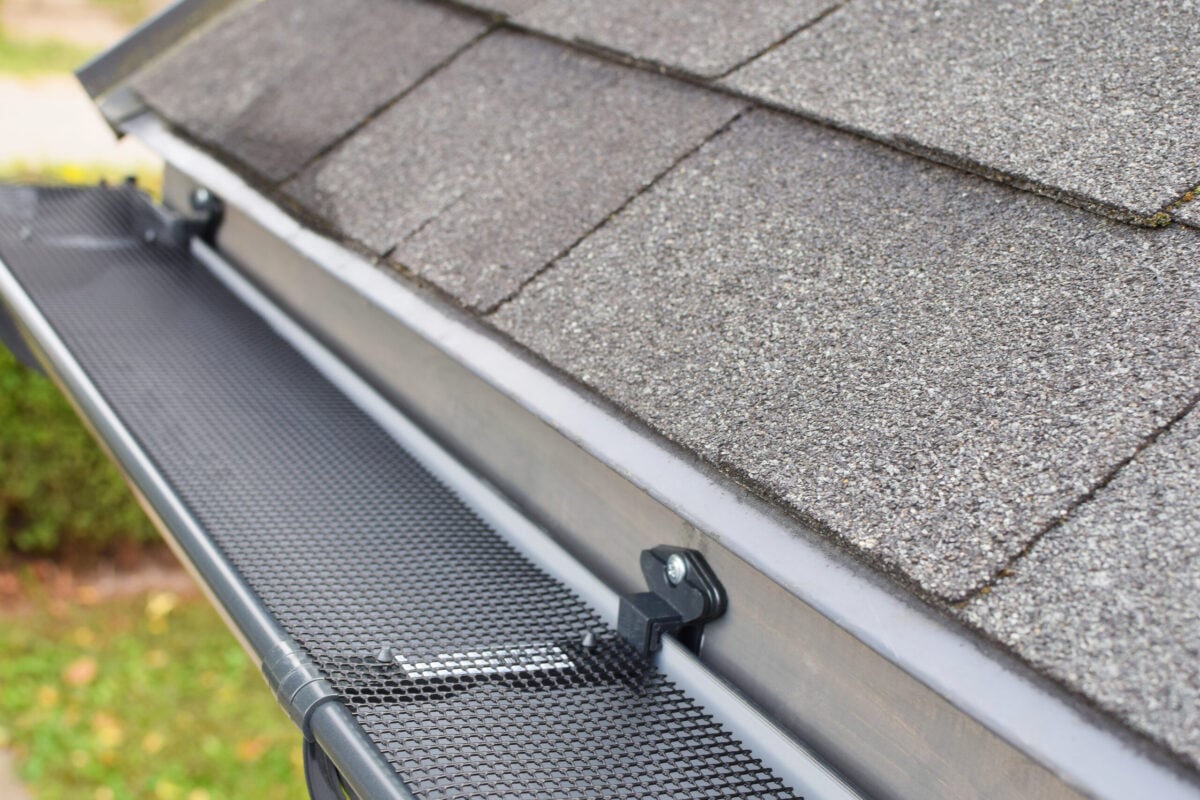
A stainless steel micro mesh gutter guard is the clear top performer for Florida homes across all debris categories. The fine stainless steel mesh layer sits over an aluminum frame and allows water to pass through while blocking pine needles, oak catkins, pollen, roof grit, and even the fine sand that coastal Florida homeowners deal with after tropical storm events. This is the only guard type that passes the Florida debris test at every level.
- Best for: All Florida debris profiles, especially pine needle and fine debris environments
- Florida advantage: Stainless steel mesh resists salt air corrosion better than standard galvanized steel alternatives; aluminum frame will not rust
- Installed cost: $3 to $8 per linear foot depending on brand and installation method
- Lifespan: 20-plus years with annual surface clearing
- Limitation: Requires the highest upfront investment of any guard type; quality varies significantly between brands
2. Reverse Curve (Surface Tension) Guards
Reverse curve systems, sometimes marketed under brand names like Gutter Helmet, use surface tension to direct water around a curved lip and into the gutter while debris falls to the ground. They perform well against large leaves and require no mesh opening that debris can penetrate. In Florida, they work best on homes surrounded by larger-debris vegetation rather than pine or palm environments.
- Best for: Homes with large deciduous leaf debris and moderate rainfall volume
- Florida advantage: No mesh to clog with fine debris; sheds large fronds and leaves without surface accumulation
- Installed cost: $3 to $6 per linear foot
- Lifespan: 15 to 25 years
- Limitation: High-volume Florida rainstorms can overwhelm the surface tension mechanism, causing water to overshoot the gutter during peak flow events; not recommended for homes with pine or pollen-heavy debris
3. Perforated Aluminum Screen Guards
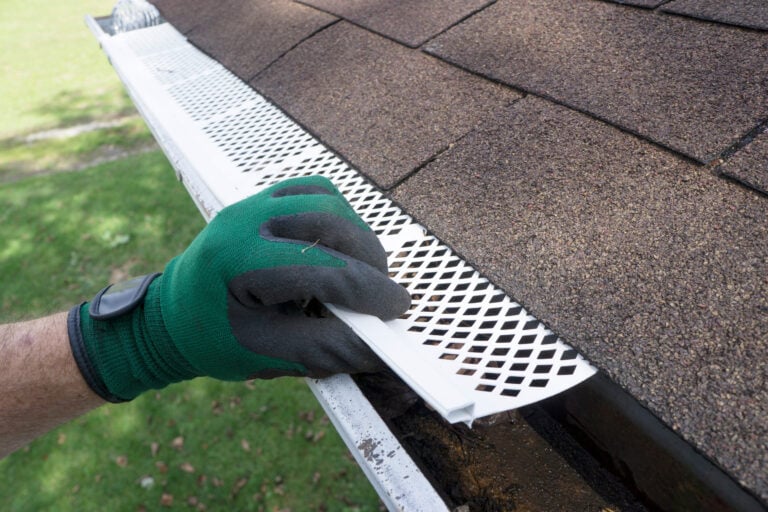
Perforated aluminum guards sit over the gutter opening and block larger debris while allowing water flow through punched holes. They are durable, widely available, and handle large leaf and frond debris adequately. The hole size is the key variable: holes large enough to pass Florida’s heavy rain volume are also large enough to allow pine needles and pollen through.
- Best for: Florida homes with mostly large-debris vegetation and minimal pine or pollen load
- Florida advantage: Aluminum construction resists corrosion; handles high water flow without overshooting
- Installed cost: $1 to $3 per linear foot
- Lifespan: 10 to 20 years
- Limitation: Allows fine debris through on most hole size profiles; periodic gutter cleaning still required on pine-heavy properties
4. Foam Insert Guards
Foam inserts sit inside the gutter channel and allow water to filter through while debris rests on the surface. They are inexpensive and easy to install but perform poorly in Florida’s specific conditions: UV exposure causes rapid foam degradation, debris embeds in the foam surface and promotes mold and mildew growth in the humid subtropical climate, and replacement is needed every 2 to 4 years.
- Best for: Short-term or budget-constrained applications only
- Florida disadvantage: UV degradation accelerates foam breakdown compared to northern climates; mold growth on foam surface is common in Florida’s humidity
- Installed cost: $1 to $2 per linear foot
- Lifespan: 2 to 4 years in Florida conditions
- Limitation: Not cost-effective over time; more suited to a temporary solution than a long-term investment
5. Brush Insert Guards

Brush guards are cylindrical bristle inserts placed in the gutter channel. Florida’s fine debris, pine needles, pollen, roof grit, and seed pods, embeds deeply in the bristles and resists clearing even after removal and cleaning. Moisture retention in the bristles also promotes corrosion of the gutter floor in aluminum systems over time.
- Best for: Not recommended for Florida homes
- Florida disadvantage: Fine Florida debris embeds in bristles; humidity and retained moisture accelerate gutter corrosion beneath the bristles
- Installed cost: $2 to $4 per linear foot
- Lifespan: 3 to 8 years
- Limitation: Performs adequately in low-debris northern environments; consistently underperforms in Florida’s subtropical debris and humidity conditions
Florida Gutter Guard Comparison Table
| Type | Florida Overall Rating | Pine/Fine Debris | High Rain Volume | Coastal Salt Air | Cost/LF |
| Stainless micro-mesh | Excellent | Excellent | Excellent | Excellent | $3-$8 |
| Reverse curve | Good | Poor | Fair | Good | $3-$6 |
| Perforated aluminum | Fair | Poor | Good | Good | $1-$3 |
| Foam insert | Poor | Poor | Fair | Poor | $1-$2 |
| Brush insert | Poor | Poor | Fair | Poor | $2-$4 |
How to Match Guard Type to Your Florida Debris Environment
The right gutter guard for your home depends more on what is growing around it than what is growing nationally popular. Here is a quick guide to matching guard type to common Florida vegetation profiles.
- Pine-heavy properties (slash pine, longleaf pine): Stainless micro-mesh only. No other guard type reliably stops pine needle intrusion.
- Live oak-dominated yards: Micro-mesh is the strongest performer. Perforated aluminum or reverse curve can work if pollen and small catkins are not a significant issue.
- Palm-dominated yards with minimal pine: Reverse curve or perforated aluminum are viable at lower cost; micro-mesh still preferred for complete protection.
- Coastal properties within 2 miles of the Gulf: Stainless steel micro-mesh with aluminum frame only. Galvanized steel frames and standard steel mesh corrode significantly faster in salt-air exposure.
- Mixed subtropical vegetation: Stainless micro-mesh is the only reliable all-conditions choice.
What Professional Installation Adds
The difference between a professionally installed gutter guard and a DIY system goes beyond labor. Gutter guard materials vary significantly in mesh grade, frame alloy, and coating quality, and a professional installer specifies the right gutter guard materials for your debris environment rather than defaulting to whatever ships fastest. A professional installer evaluates gutter condition and pitch before any guard goes on, addresses hanger and fascia issues that would cause the guard to underperform, ensures correct overlap and fastening at each section, and confirms downspout capacity is adequate for Florida’s rainfall volume. DIY gutter guards, including the clip-on mesh rolls and snap-in panels sold at home improvement stores, are designed for homeowner installation and carry a lower upfront cost. A quality DIY micro-mesh product installed over gutters with incorrect pitch, insufficient downspouts, or compromised hangers will underperform regardless of how good the guard material is. Professional installation also typically includes a warranty on the workmanship that DIY installation cannot provide.
Frequently Asked Questions About Gutter Guards for Florida Homes

Florida homeowners evaluating gutter guard options tend to ask the same practical questions. Here are direct answers.
Do gutter guards work in Florida?
Yes, when the right type is selected for Florida’s debris profile. Micro-mesh guards consistently outperform other types in Florida because they handle the full range of Florida debris, from large palm fronds to fine pine needles and pollen, without allowing intrusion. Guards designed primarily for large leaf debris in deciduous climates often perform poorly on Florida’s fine debris. The selection matters as much as the decision to install.
How often do gutter guards need cleaning in Florida?
Even the best-performing micro-mesh guards benefit from an annual inspection and surface clearing. Pollen and roof grit can accumulate on the mesh surface and slow water penetration during heavy rainfall events. Downspout screens should be checked after major storm events. The realistic expectation is one maintenance visit per year rather than zero, which still represents a significant reduction over unguarded gutters in Florida’s debris environment.
Are national brand gutter guard systems worth it in Florida?
National brands like LeafFilter, LeafGuard, and similar systems use micro-mesh technology that performs well in Florida’s debris environment. The primary consideration is cost relative to locally installed alternatives that use comparable or identical mesh technology. National brands carry the cost of marketing, sales commissions, and national infrastructure in their pricing. A locally installed professional micro-mesh system using comparable materials often delivers equivalent performance at meaningfully lower cost per linear foot. Get written specifications on the mesh grade and frame material before comparing quotes.
What is the best gutter guard for pine needles in Florida?
Fine stainless steel micro-mesh with hole sizes small enough to stop pine needle intrusion, typically 50 microns or smaller, is the only reliable solution for Florida pine needle environments. Standard aluminum mesh and perforated guards allow pine needles through regardless of manufacturer claims. Ask specifically for the micron rating of the mesh before committing to any product being sold as a pine needle solution.
Quality Roofing Solutions: Florida’s Gutter Guard Experts
Choosing the right gutter guard for a Florida home requires understanding the debris environment, rainfall intensity, and coastal exposure specific to your property, not just what ranks well in national reviews. At Quality Roofing Solutions, we install gutter guard systems selected and sized for Florida’s conditions across northwest Florida, with the product knowledge to match the right system to your specific home and the installation quality to make it perform as advertised.
Find out which gutter guard your home actually needs with a free assessment from our team.