 (850) 753-0041


FORTIFIED Roofing in Pensacola: What It Is and How the Designation Works
May 26, 2026
11 minutes Read
If you own a home along the Gulf Coast, preparing for hurricane season comes with the territory. FORTIFIED roofing is one way homeowners in Pensacola, Gulf Breeze, Pace and the rest of Escambia and Santa Rosa counties can add another layer of protection to their home before the next storm. This guide explains what a FORTIFIED roof is, what changes on your roof, who does what in the process, and what to ask before you decide.

Pat B. is not a roofer or a program official. He is a homeowner who came to us from a business background where planning for disasters was part of the job, and he wanted a house that would be better prepared for the next storm. Pat’s perspective is similar to what we hear from a lot of Gulf Coast homeowners: they are not looking for a complicated roofing system. They want to know their home is ready when the weather turns.
What Is a FORTIFIED Roof?

FORTIFIED is a voluntary construction and re-roofing standard from the Insurance Institute for Business & Home Safety (IBHS), the research organization that studies how homes hold up in hurricanes, hail and high wind. It is not a brand of shingle, not a warranty, and not a Florida Building Code requirement. It is a short list of installation details that go beyond code, plus third-party verification and photo documentation that give you a record of how your roof was built. IBHS announced in May 2026 that the FORTIFIED program has passed 100,000 designations nationwide, with more than half of those earned in the last three years.
The roles are simple, and worth knowing up front. We install the roofing system to FORTIFIED requirements. An independent FORTIFIED evaluator, who does not work for us, verifies the work. IBHS issues the designation. A home does not become FORTIFIED because a roofer says so, and Quality Roofing Solutions does not certify its own roofs.
The program has three levels. FORTIFIED Roof covers the roof system and is the level most Pensacola homeowners pursue during a roof replacement. FORTIFIED Silver adds protection for windows, doors, garage doors and gable ends. FORTIFIED Gold ties the whole structure together from roof to walls to foundation and most often comes up with new construction.
3 Big Upgrades FORTIFIED Makes to a Pensacola Roof
Every FORTIFIED detail sits underneath the shingles, metal or tile, where you will not see it once the roof is finished. That is why the program includes photo documentation. Three details make a roof FORTIFIED.
1. A sealed roof deck
FORTIFIED requires an added water barrier over the roof deck. If shingles are damaged or blown off during a storm, that secondary layer helps keep wind-driven rain from entering the home. On the Gulf Coast, water getting in after the roof covering is damaged is often what does the real harm inside a house, so this is the detail most homeowners care about.
Technical detail: IBHS allows three ways to seal the deck: taping every seam under a layer of underlayment, a fully adhered membrane with felt over it, or a self-adhered membrane over the entire deck.

2. A stronger roof deck attachment
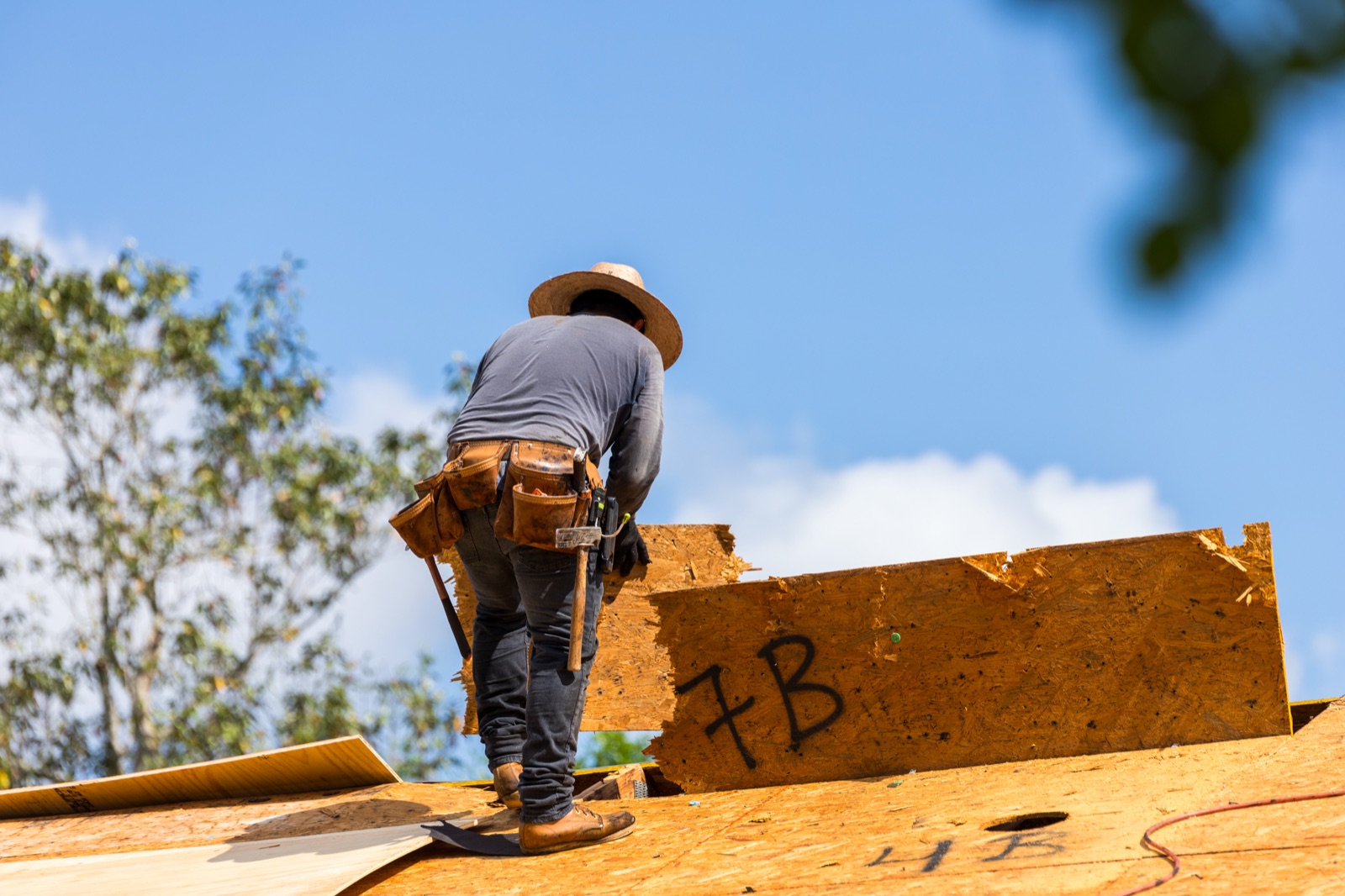
FORTIFIED adds requirements beyond a standard roof replacement, including a specific roof deck fastening pattern designed for greater wind resistance. The decking is fastened with ring-shank nails, which grip the wood better than smooth nails, on a tighter spacing than code requires. If your existing deck stays in place, it is re-nailed to that pattern before any underlayment goes down.
Technical detail: 8d ring-shank nails, spaced nominally 4 inches on center for a Hurricane designation like Pensacola’s.

3. Reinforced roof edges
Wind works on a roof at the edges first. FORTIFIED calls for a heavier metal drip edge installed over the underlayment and fully adhered starter shingles at the eaves and rakes. Together they create a stronger roof perimeter designed to better resist wind uplift.
Technical detail: minimum 26-gauge drip edge extending at least 2 inches onto the roof and a half inch below the sheathing, with adhered edge shingles.

Shingle, metal or tile
Because the standard lives under the roof covering, it works with architectural shingles, standing seam and metal roofing, and tile. For a broader look at how roofing materials and installation details hold up in a hurricane, see our guide to hurricane proof roofs in Florida.
Why It Comes Up So Often in Pensacola
Pensacola sits in one of the more hurricane-exposed stretches of the Gulf Coast. Hurricane Ivan made landfall near Gulf Shores in September 2004 as a Category 3 storm and remains one of the most significant storms on record for Escambia and Santa Rosa counties. Hurricane Sally, in September 2020, was another reminder that wind is not the only concern during a Gulf Coast storm. Once a roof system is compromised, hours of wind-driven rain can lead to significant water damage inside the home.
Building codes in Escambia and Santa Rosa counties have strengthened since Ivan, and the Florida Building Code is among the strongest in the country. FORTIFIED adds to that on the three details above, and it adds a documented record of how the roof was built that you can keep with your home’s paperwork. Our storm damage roof repair team hopes you never need it.
How the FORTIFIED Roof Designation Works
- Roof inspection and FORTIFIED estimate. We take a look at your roof and walk you through what the FORTIFIED details would add to your roof replacement.
- You engage an independent FORTIFIED evaluator. Evaluators are certified by IBHS and are not employed by the roofing contractor. You can find one through the FORTIFIED provider directory. The evaluator documents existing conditions and confirms the plan meets the standard.
- Installation with photo documentation. The FORTIFIED details are installed and photographed before they are covered, so the deck nailing, sealed seams and edge metal are on record for the evaluator.
- Evaluator review and IBHS designation. The evaluator submits the documentation to IBHS. On approval, your home receives a FORTIFIED Roof designation certificate.
- Keep it current. A FORTIFIED designation is valid for five years. At the end of each five-year period a renewal inspection is required, and if the roof is in good condition a single site visit is usually all it takes.
For the step-by-step version of this process, and what we handle versus what the evaluator handles, see our FORTIFIED roofing page.
FORTIFIED Roofing and Homeowners Insurance in Florida
This is the question every Pensacola homeowner asks first, so here is the honest version. Florida law (Section 627.0629, Florida Statutes) requires residential property insurers to offer discounts or credits for construction features that reduce windstorm damage. Those features are documented on the state’s Uniform Mitigation Verification Inspection Form, better known as the wind mitigation form (OIR-B1-1802). Several of the features that form credits, including a sealed roof deck as secondary water resistance and enhanced roof deck attachment, are the same details FORTIFIED requires.
What that means for your premium depends on your carrier and your policy, and we are not the ones who can answer it. Quality Roofing Solutions provides the installation photos and documentation from your roof. Your insurance agent tells you how your carrier treats a FORTIFIED designation and whether you need a new wind mitigation inspection after the roof is done. Bring both the designation certificate and the wind mitigation form to that conversation.
Florida also runs the My Safe Florida Home program through the Department of Financial Services, which offers wind mitigation inspections and grants toward roof hardening improvements such as roof deck attachment and secondary water resistance for eligible owner-occupied homes. Funding opens and closes by cycle, so check mysafeflhome.com for the current status before you plan around it.
What a FORTIFIED Roof Costs in Pensacola
The FORTIFIED details add material and labor to a standard roof replacement, mostly in deck sealing, ring-shank fasteners and edge metal, plus the independent evaluator’s fee. How much depends on your roof’s size and pitch, the condition of the existing deck, and whether you choose shingles, metal or tile. We do not publish a flat number because there is not one. Ask us to price the FORTIFIED details when you request your estimate so you can compare them with a standard replacement.
FORTIFIED Roofing from a Local Team
We have been roofing homes across Northwest Florida since 2006, so we understand what Gulf Coast weather can ask of a roof. Our team can walk you through the difference between a standard roof replacement and a FORTIFIED Roof, explain what changes during installation, and provide the installation documentation your independent evaluator asks for. We serve homeowners across Northwest Florida, including Pensacola, Gulf Breeze, Pace, Milton, Navarre, Fort Walton Beach, Destin, Niceville, Crestview and DeFuniak Springs.
And if FORTIFIED is not the right fit for your home, we will tell you that too.
Considering a FORTIFIED roof?
We will take a look at your current roof, explain what FORTIFIED would change, and help you compare your options. No pressure, just a clear understanding of what makes sense for your home. Schedule a roof inspection, or read what your neighbors say on our reviews page.
FORTIFIED is not only a Florida option. If your home is in Baldwin or Mobile County, we install to the same standard across coastal Alabama.
FORTIFIED Roofing in Pensacola: Frequently Asked Questions
What is a FORTIFIED roof?
A FORTIFIED Roof is a roof installed to the IBHS FORTIFIED standard, with a sealed roof deck, ring-shank nails in an enhanced pattern and reinforced edges, then verified by an independent FORTIFIED evaluator. IBHS issues a designation certificate that is valid for five years.
Can my existing Pensacola roof be made FORTIFIED without replacing it?
Usually not. Sealing the deck seams and re-nailing the decking require the old roof covering to come off, so FORTIFIED is almost always done as part of a full roof replacement. If your roof is in good shape and does not need replacing, we will tell you so.
Does a FORTIFIED roof work with metal roofing?
Yes. The FORTIFIED Roof standard covers the deck, fasteners and edges under the roof covering, and IBHS publishes approved details for asphalt shingle, metal and tile roofs.
Who issues the FORTIFIED certificate?
IBHS issues the designation after an independent FORTIFIED evaluator submits photo documentation of the work. We install the roof to FORTIFIED requirements; the evaluator verifies it; IBHS issues the designation. Quality Roofing Solutions does not certify its own roofs.
Will a FORTIFIED roof lower my homeowners insurance in Florida?
Florida law requires insurers to offer discounts for verified wind mitigation features, and several FORTIFIED details, including a sealed roof deck and enhanced deck attachment, are among them. The amount depends on your carrier and policy. Bring your FORTIFIED designation certificate and wind mitigation form to your insurance agent, who can tell you exactly how your policy treats them.
How much more does a FORTIFIED roof cost than a standard roof replacement?
The added cost comes from deck sealing, ring-shank fasteners, heavier edge metal and the independent evaluator’s fee, and it varies with roof size, pitch, deck condition and material. Ask us to price the FORTIFIED details when you request an estimate so you can compare them with a standard replacement.
How long does a FORTIFIED designation last?
Five years. IBHS requires a renewal inspection at the end of each five-year period. If the roof is in good condition and the home has not been modified, one site visit by a FORTIFIED evaluator is usually all that is required.