 (850) 753-0041


Early Stage Mold on Ceiling From Roof Leak: What to Do
August 4, 2026
6 minutes Read
Finding dark spots on your ceiling after a rain event is not something to wait on. Early stage mold on ceiling from roof leak damage moves fast — and in Florida’s humid climate, it moves faster than most homeowners expect. The good news is that catching it early means your options are still manageable. This guide walks you through what you are looking at, what to do, and why fixing the roof first is the only approach that actually works. If your roof is the source, our residential roofing team can help. Here is what we cover:
- Why roof leaks cause ceiling mold growth so quickly in Florida
- How to identify early stage ceiling mold
- The 5 steps to address it correctly
- How to prevent mold growth from coming back
- Frequently asked questions homeowners commonly ask
Why Roof Leaks Cause Ceiling Mold Growth So Fast

Roof leaks do not have to be dramatic to trigger ceiling mold growth. A slow drip through a failed flashing seal or a cracked shingle delivers enough moisture to saturate drywall and insulation without producing a visible puddle — and by the time a stain appears on the ceiling, the materials above it have usually been wet far longer than the stain suggests.
According to the U.S. Environmental Protection Agency, wet materials dried within 24 to 48 hours after a leak will not grow mold in most cases — but moisture left beyond that window makes mold development likely. In Pensacola and the surrounding areas, Florida’s heat and ambient humidity mean that window closes even faster. Ceiling mold growth can appear within days of a leak going unnoticed during wet season.
What Early Stage Ceiling Mold Looks Like
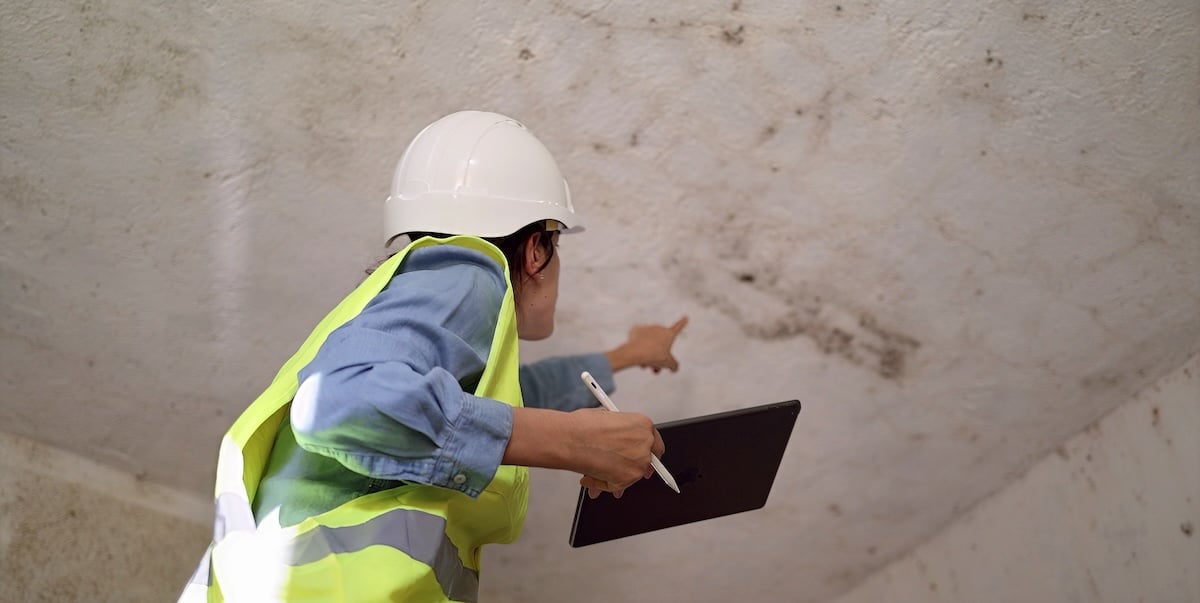
Early stage ceiling mold growth typically appears as small gray, green, brown, or black spots near a water stain — sometimes fuzzy or powdery in texture. A musty odor from the ceiling or attic often shows up before visible growth does. It is not mildew, which stays on the surface. Mold penetrates into drywall and ceiling tiles, meaning what you see on the surface is usually less than what has established in the material itself.
5 Steps to Address Ceiling Mold From a Roof Leak
Ceiling mold growth from a roof leak requires a specific sequence. Skipping straight to mold removal without fixing the leak first is the most common mistake — and it guarantees the problem returns.
1. Repair the Roof First
No mold removal effort holds while the leak is still active. Arrange a professional roof inspection to locate and repair the source. The entry point is rarely directly above the ceiling stain — water travels along decking and framing before dripping down, sometimes several feet from where the stain appears.
2. Dry the Materials Completely
Once the roof is repaired, run fans and your air conditioner continuously to bring indoor humidity down and dry out the affected area. The air conditioner actively pulls moisture from the air while it runs — one of the most effective tools available in Florida’s climate to prevent mold growth from establishing further. Confirm the ceiling material has dried below 15 percent moisture content before doing any patching.

3. Assess the Scope
Early stage ceiling mold growth under 10 square feet can often be handled as a DIY project by a healthy adult. Larger areas, mold that has spread across multiple ceiling sections, or any situation where occupants have respiratory symptoms warrants professional mold testing and remediation. Mold testing by a certified inspector clarifies the species, extent, and whether the HVAC system has been affected.
4. Mold Removal and Material Replacement
For small hard-surface areas, scrub with a diluted bleach solution — one cup per gallon of water — with gloves and ventilation. Porous materials like drywall that show penetration should be removed and replaced entirely. Painting over active ceiling mold growth without mold removal first will peel and allow growth to continue underneath.
5. Replace the Insulation Above
Insulation above a mold-affected ceiling is almost always compromised. Saturated insulation feeds ceiling mold growth even after the roof is repaired and poses a long-term risk to the structural integrity of the ceiling framing through wood rot. It should be inspected and replaced wherever it has been wetted.
How to Prevent Mold Growth After Repairs

Once the roof is repaired and mold removal is complete, keeping indoor humidity below 50 percent year-round is the most effective way to prevent mold growth from recurring. Run your air conditioner consistently during Florida’s wet season — it removes moisture from the air continuously and is your best defense against the ambient humidity that makes Florida homes more susceptible than most. Annual professional roof inspections catch developing leaks before they ever produce ceiling mold growth.
We’re proud to serve home and business owners in Pensacola, FL, and nearby communities with roof leak inspections and repair services that stop problems at the source.
Frequently Asked Questions About Ceiling Mold From Roof Leaks
Homeowners dealing with ceiling mold from a roof leak tend to have the same practical questions about health risks, the repair process, and how to keep the problem from coming back. Here are direct answers to the most common ones.
Is ceiling mold from a roof leak dangerous?
Early stage ceiling mold growth in a small area presents a low risk for most healthy adults, but the CDC notes mold can trigger respiratory symptoms, allergic reactions, and worsened asthma — particularly in sensitive individuals. Mold removal is always the right response, not monitoring. If occupants have unexplained symptoms while mold is present, professional remediation and medical consultation are warranted.
Do I need professional mold testing?
Mold testing is not required for small visible areas — if mold is there, it needs to come out regardless of species. Mold testing becomes valuable when the scope is unclear, when occupants have health symptoms, when growth may have reached the HVAC system, or when documentation is needed for insurance or a real estate transaction.
How do I know if mold has gone deeper than the surface?
Surface mold comes away with cleaning and does not return. Mold that has penetrated the drywall recurs after cleaning, often comes with a persistent musty smell, and may produce soft or discolored patches in the material. When in doubt, a moisture meter confirms whether the drywall is still wet enough to be supporting active growth below the surface.
How do I stop ceiling mold from coming back?
Fix the roof leak completely, dry all materials before closing up the ceiling, and keep indoor humidity below 50 percent with your air conditioner running during wet season. The only reliable way to prevent mold growth from recurring is to eliminate the moisture source. Annual roof inspections are the long-term prevention strategy.
Quality Roofing Solutions: Fix the Source, Solve the Problem

Mold removal without fixing the roof is a temporary solution. Ceiling mold growth will return after the next rain event until the leak is resolved. At Quality Roofing Solutions, we have been finding and repairing the roof leaks behind ceiling mold problems for homeowners across northwest Florida for over 20 years. If you have a ceiling stain, visible mold, or a musty smell you cannot locate, do not wait. Contact our team today to schedule your free roof inspection and get the problem fixed at its source.