 (850) 753-0041


Are Gutters Necessary in Florida? A Homeowner’s Guide
July 30, 2026
11 minutes Read
Florida homeowners hear conflicting things about gutters. Some contractors say they are essential protection. Others say the state’s sandy soil handles drainage just fine. Builders skip them to cut costs, and many homes go up without them and seem to do fine — at least for a while. So what is the actual answer to the question: are gutters necessary in Florida? The honest answer is that it depends on your home’s specific situation, but for most properties the answer leans heavily toward yes. If you are thinking about your home’s gutter system and want the full picture before making a decision, this guide is for you. Here is what we cover:
- Why gutters matter more in Florida than most homeowners realize
- 5 types of damage that unmanaged roof runoff causes in Florida’s climate
- When gutters may be less critical — and when they are non-negotiable
- What type of gutter system performs best in Florida
- Frequently asked questions Florida homeowners commonly ask
The Case for Gutters in Florida

The most common argument against gutters in Florida is that the state’s sandy soil absorbs water quickly. That is partially true — sandy soil does drain faster than clay — but it also erodes faster. When several inches of rain fall in an hour, which is a routine occurrence during Florida’s wet season, even well-draining soil cannot absorb the volume of water cascading off an unprotected roofline fast enough to prevent pooling, erosion, and foundation saturation.
According to the University of Florida IFAS Extension, Florida receives between 40 and 60 inches of rainfall annually depending on location, with the majority concentrated in the June through October wet season. Northwest Florida communities including Destin and the surrounding Okaloosa County coastline regularly receive rainfall volumes at the higher end of that range. That is a significant amount of water passing over the roof of a typical home every year — and without a system to collect and redirect it, all of it lands at the perimeter of the foundation.
Why Florida’s Building Code Does Not Require Gutters
Many Florida homeowners are surprised to learn that state building code does not require gutters on most residential construction. Gutters are mandatory under Florida code only when a home has a roof draining onto a lower roof level or when eave overhangs are less than six inches. Builders, motivated to reduce construction costs, take advantage of this exception regularly. The absence of a code requirement is not an indication that gutters are unnecessary — it reflects a minimum standard of construction, not a recommendation for long-term home health.
5 Types of Damage Caused by Skipping Gutters in Florida

The damage that unmanaged roof runoff causes in Florida rarely shows up immediately. It accumulates gradually across multiple wet seasons and becomes expensive by the time it is visible. These are the five most common and costly consequences.
- Foundation erosion and settlement: Roof runoff that falls directly at the base of a home saturates the soil around the foundation repeatedly. This erosion removes the soil support beneath the slab, contributing to foundation settling, cracking, and costly structural repairs over time.
- Fascia and soffit rot: Without gutters, water runs directly over the fascia board at the roof edge on every rain event. Over time, this continuous moisture exposure rots wood fascia and soffit material, leading to repairs that far exceed the cost of gutter installation.
- Siding and exterior wall staining: Splash-back from water hitting the ground near the foundation carries soil and debris onto siding, stucco, and exterior paint. The staining is cosmetic at first but can eventually penetrate exterior finishes and contribute to moisture intrusion behind the wall.
- Landscape and soil erosion: Roof runoff behaves like a concentrated stream when it falls from an unprotected eave, cutting channels in mulch beds, exposing plant roots, and eroding topsoil away from the foundation perimeter.
- Mosquito breeding: Standing water that pools near a home after rain events creates prime breeding habitat for mosquitoes. In Florida, where mosquito pressure is significant from spring through fall, this is a quality-of-life concern that gutters directly reduce.
When Gutters May Be Less Critical in Florida
There are specific situations in which a Florida home may manage without gutters more effectively than typical construction. Understanding those conditions helps homeowners assess their own property honestly.
- Long roof overhangs: Homes designed with eave overhangs of 24 inches or more naturally carry water further from the foundation before it falls. These architectural features reduce — but do not eliminate — the runoff impact at the foundation perimeter.
- Sloped lots with positive drainage: A home situated on a lot that slopes away from the foundation in all directions, with no areas where runoff can collect near the structure, is less dependent on gutters to prevent foundation moisture. These lots are less common in Florida’s generally flat terrain but do exist.
- Well-designed landscape drainage: Homes with professionally designed French drains, swales, or other perimeter drainage features that actively move surface water away from the foundation may manage without gutters in lower-rainfall scenarios.
- Limited roof surface area: Very small homes with compact roof footprints generate less total runoff volume, reducing the severity of the problem in lighter rain events.
Even in the above situations, extended Florida wet seasons and tropical storm events produce rainfall volumes that overwhelm passive drainage solutions. A well-installed gutter system provides an additional layer of protection that no landscape feature fully replaces.
What Type of Gutters Work Best in Florida
Not all gutter systems are equally suited to Florida’s combination of heavy rainfall, coastal humidity, UV exposure, and storm activity. Here is how the main options compare.
| Gutter Type | Material | Best Feature | Florida Consideration |
| Seamless aluminum | Aluminum | No seams to leak or clog | Most popular choice; resists corrosion |
| K-style sectional | Aluminum or vinyl | Lower cost | Seams are potential leak points over time |
| Half-round | Copper or aluminum | Classic aesthetic | Copper develops attractive patina; higher cost |
| Oversized (6-inch or 7-inch) | Aluminum | Higher volume capacity | Recommended for Florida’s heavy rainfall rates |
| Vinyl sectional | PVC | Lowest cost | Degrades faster in Florida’s UV and heat |
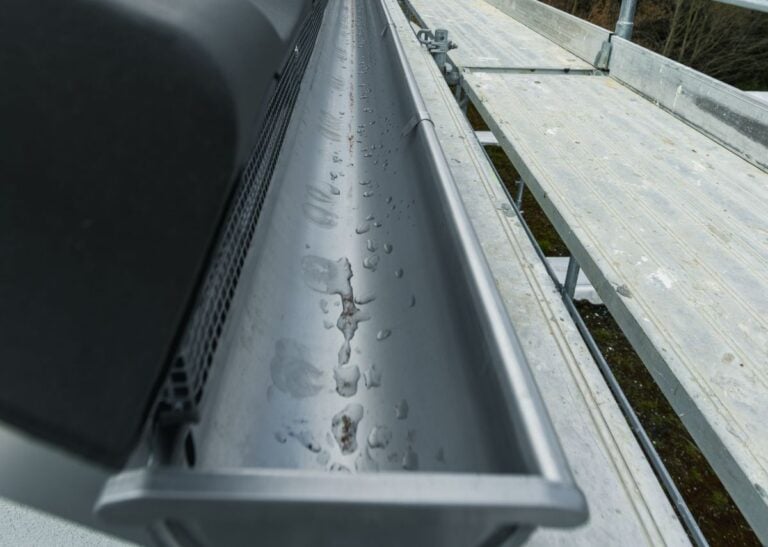
For most Florida homes, seamless aluminum gutters in a 6-inch profile represent the best combination of performance, durability, and cost. Seamless gutters are fabricated on-site from a continuous coil of aluminum, eliminating the seams where sectional gutter systems most commonly develop leaks and debris buildup. The 6-inch width handles the high volume rainfall rates that Florida’s wet season produces without overflowing, which is a real concern with standard 5-inch gutters in heavy storms. We’re proud to serve home and business owners in Destin, FL, and nearby Okaloosa County communities with gutter installation and roofing services designed for Florida’s specific climate demands.
Vinyl gutters are the most affordable option but are also the least suited to Florida. UV exposure and heat cause vinyl to become brittle and warp over time, and the material performs poorly during high-wind storm events. For a state that regularly experiences tropical weather, vinyl gutters are a short-term solution that will require earlier replacement than aluminum systems.
Gutter Maintenance in Florida: What to Expect

Gutters in Florida require more attention than the same systems in drier climates. The combination of year-round growth, heavy leaf fall from live oaks and palms, and frequent storm debris means gutters fill faster than in most other states.
- Cleaning frequency: Florida gutters should be cleaned a minimum of twice per year — once in spring before the wet season begins and once in fall after peak storm activity. Homes surrounded by large trees may require quarterly cleaning.
- Post-storm inspection: After any significant wind event, gutters should be inspected for debris accumulation, fastener loosening, and damage from flying debris. Gutters that are sagging or pulling away from the fascia after a storm should be reattached promptly before the next heavy rain.
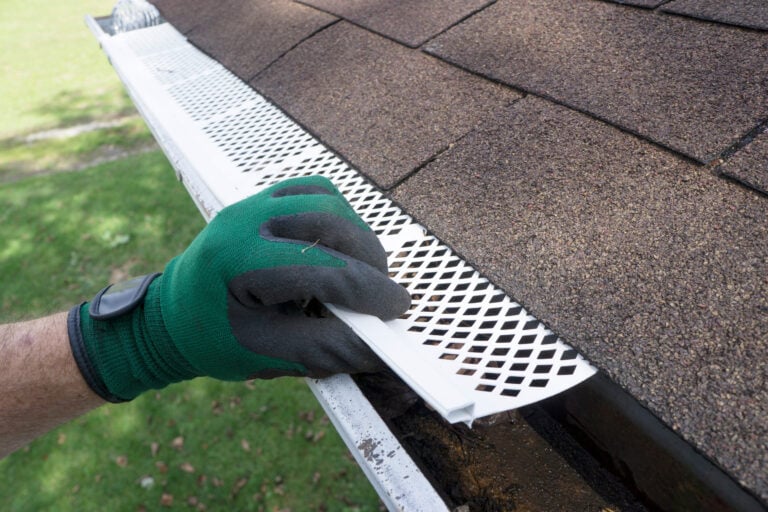
- Gutter guards: Gutter guard systems that cover the opening and prevent debris entry are popular in Florida and can meaningfully reduce cleaning frequency. They work best when professionally installed to ensure the guard profile does not trap debris or allow overflow during intense rain events.
- Downspout extensions: Florida homeowners should confirm that downspouts terminate at least four to five feet from the foundation perimeter. Short downspout terminations that drop water adjacent to the foundation defeat the purpose of the gutter system.
Frequently Asked Questions About Gutters in Florida
Florida homeowners ask practical questions about gutters before making installation decisions. Here are direct answers to the most common ones.
What are the benefits of having gutters on a Florida home?
Gutters protect your home on multiple fronts. They direct roof runoff away from the foundation, preventing soil erosion and the settling and cracking that follows. They keep fascia and soffit boards dry, reducing rot at the roofline. They protect siding and exterior paint from splash-back staining, preserve landscaping from concentrated runoff, and eliminate standing water near the home that breeds mosquitoes. In a state that receives up to 60 inches of rain annually, all concentrated in a five-month wet season, that protection adds up to far more than the cost of installation.
Do most Florida homes have gutters?
No — a significant portion of Florida homes, particularly those built by production builders focused on minimizing costs, are constructed without gutters. This is more common in newer developments where builders take advantage of the Florida Building Code exception for homes with adequate eave overhangs. The absence of gutters on neighboring homes does not mean your home does not need them; it reflects builder economics, not sound water management practice.
Will gutters get damaged in a hurricane?
Gutters can be damaged in severe hurricane-force wind events by flying debris and extreme wind pressure. However, properly installed gutters that are securely fastened with hidden hanger systems at appropriate intervals withstand most tropical storm and Category 1 hurricane conditions without damage. The risk of gutter damage in a hurricane is far lower than the risk of ongoing foundation, fascia, and siding damage from years of unmanaged roof runoff. After any storm event, a post-storm inspection confirms whether the gutter system needs attention.
What size gutters do I need for a Florida home?
Most Florida homes benefit from 6-inch gutters rather than the standard 5-inch size common in other states. The difference in capacity is significant — a 6-inch gutter handles approximately 50 percent more water volume than a 5-inch gutter — and that capacity matters when several inches of rain fall quickly during a Florida summer storm. Larger homes with steep roof pitches or high total roof area may benefit from 7-inch gutters at primary drainage points. A professional installer can calculate the right sizing based on your roof’s dimensions and pitch.
Are seamless gutters worth the extra cost in Florida?
Yes, for most Florida homeowners. Seamless gutters are fabricated from a continuous piece of aluminum that runs the full length of each gutter section, eliminating the seam joints where sectional gutters most commonly fail. In Florida’s high-rainfall, high-humidity environment, those seam joints deteriorate faster than in drier climates — they separate, leak, and accumulate debris that accelerates corrosion. The premium for seamless gutters over sectional is modest, and the reduction in long-term maintenance and replacement cost makes them worth the investment for most properties.
How do I know if my current gutters are working properly?
Walk around your home’s exterior during or immediately after a heavy rain event. Gutters that are working correctly carry water to the downspouts without overflow. Signs of a failing gutter system include water pouring over the front edge of the gutter, water running behind the gutter along the fascia, downspouts that are not flowing during active rain, standing water pooling near the foundation after rain stops, or visible separation at seam joints. Any of these conditions warrant professional evaluation and repair.
Quality Roofing Solutions: Gutters That Work for Florida

The answer to whether gutters are necessary in Florida is almost always yes — but the right system, properly installed and maintained, matters just as much as the decision to have them. Undersized gutters, improperly sloped runs, and inadequately secured fasteners all undermine what gutters are designed to do. At Quality Roofing Solutions, we install gutter systems designed specifically for Florida’s rainfall volumes and coastal conditions, with the same attention to detail that defines every roofing project we complete.
Whether you are adding gutters to a home that never had them or replacing an aging system that is no longer keeping up, our team is ready to help. Contact our team today to schedule a free consultation and find out what the right gutter solution looks like for your specific home and property.