 (850) 753-0041


Minimum Slope for Metal Roof (What to Know & Why)
March 19, 2026
6 minutes Read
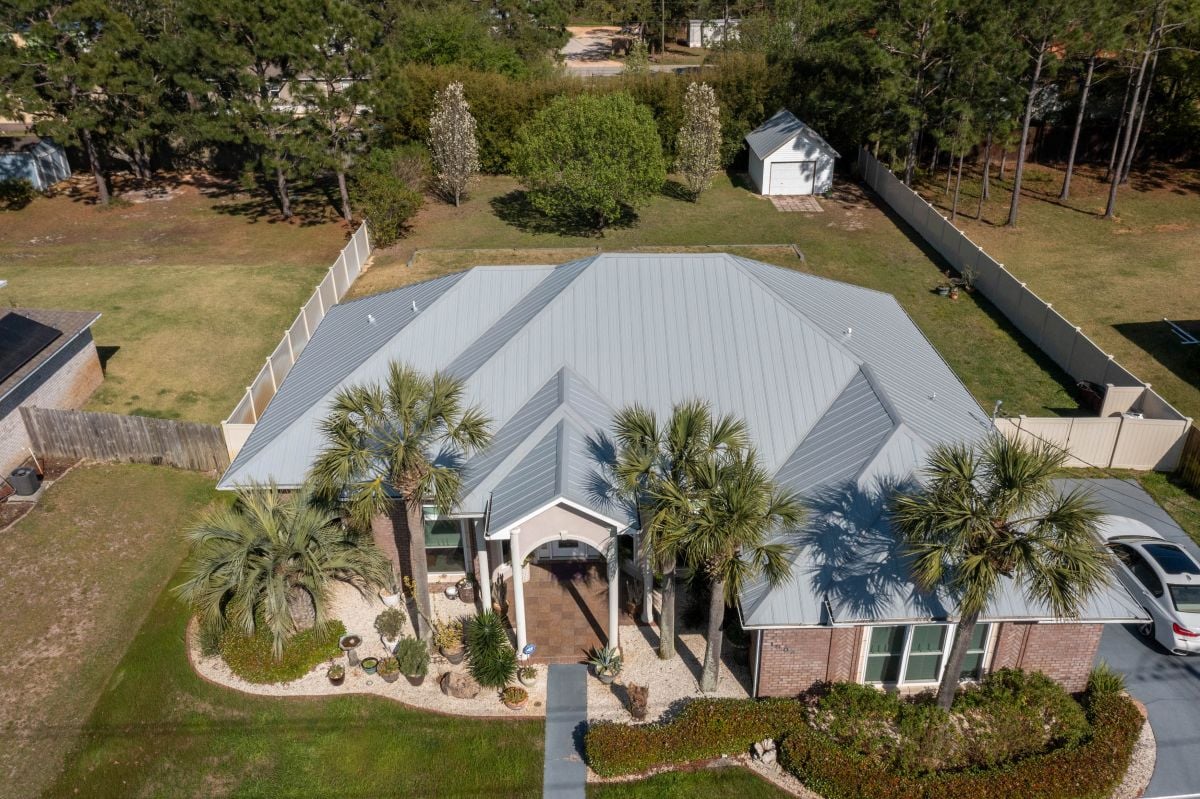
Minimum slope for metal roof requirements play a major role in how well a metal roofing system performs over time. Roof slope affects water drainage, panel selection, installation methods, and long-term leak resistance. Homeowners considering a metal roof should understand why slope matters and how different metal roofing systems are designed to work within specific pitch ranges.
- Water management: Proper slope helps move water off the roof efficiently.
- System compatibility: Not all metal panels work on low slopes.
- Leak prevention: Slope impacts seam design and fastening methods.
What Roof Slope Means in Roofing Terms
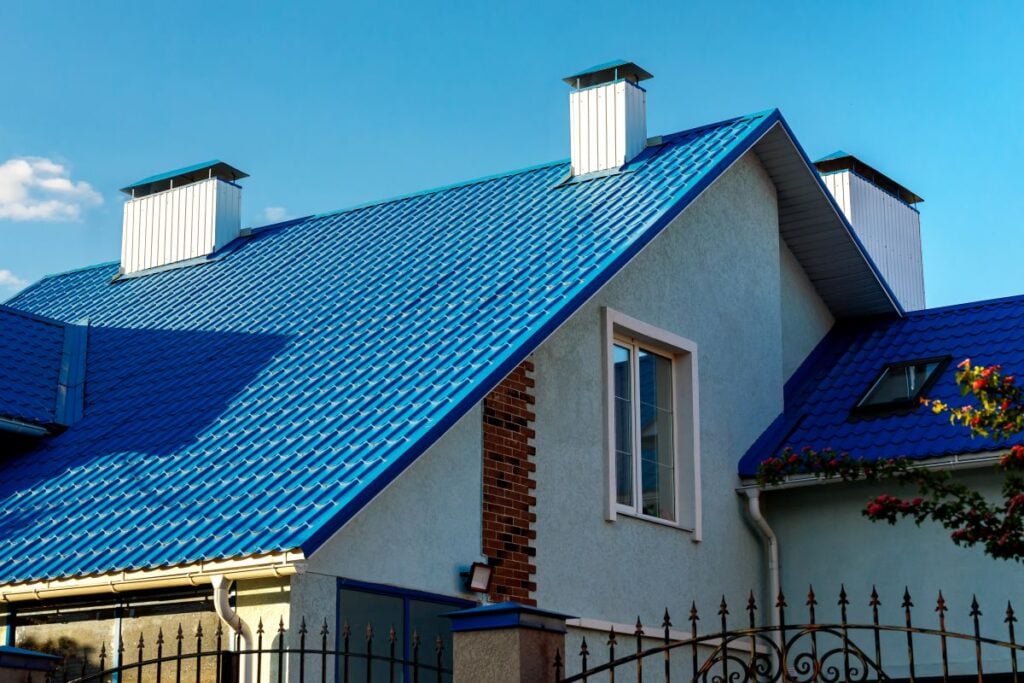
Roof slope refers to how steep a roof is and is typically expressed as a ratio of vertical rise to horizontal run. For example, a 4:12 slope means the roof rises four inches for every twelve inches of horizontal distance.
Slope determines how quickly water, debris, and snow move off the roof surface. In metal roofing, slope is especially important because panel seams and fastening methods rely on gravity to help prevent water intrusion.
- Low slope roofs: Slopes with limited pitch that drain more slowly.
- Moderate slope roofs: Common on many residential homes.
- Steep slope roofs: Allow rapid water runoff.
Understanding slope helps homeowners choose the right roofing system.
Why Minimum Slope Matters for Metal Roofing
Metal roofs are known for durability and water resistance, but they are not immune to leaks if installed outside their design limits. Each metal roofing system is engineered to perform within a specific slope range.
When slope requirements are ignored, water can back up at seams, fasteners, or penetrations. Over time, this increases the risk of leaks and premature system failure.
- Water flow dependence: Metal relies on slope to shed water.
- Seam exposure: Flatter roofs expose seams longer to standing water.
- Installation standards: Manufacturers specify minimum slopes for a reason.
Meeting slope requirements protects both performance and warranty coverage.
4 Metal Roof Types and Their Minimum Slope Requirements
Different metal roofing systems have different minimum slope requirements. Understanding these differences helps homeowners avoid mismatched materials.
1. Exposed Fastener Metal Panels
Exposed fastener panels are commonly used due to their affordability and straightforward installation. However, they have visible screws that penetrate the panel surface.
These systems typically require a steeper slope to ensure water drains away from fasteners quickly.
- Typical minimum slope: 3:12 or greater.
- Fastener exposure: Screws create potential entry points.
- Seal reliance: Washers must remain intact to prevent leaks.
Lower slopes increase the risk of fastener-related leaks.
2. Standing Seam Metal Roof Systems
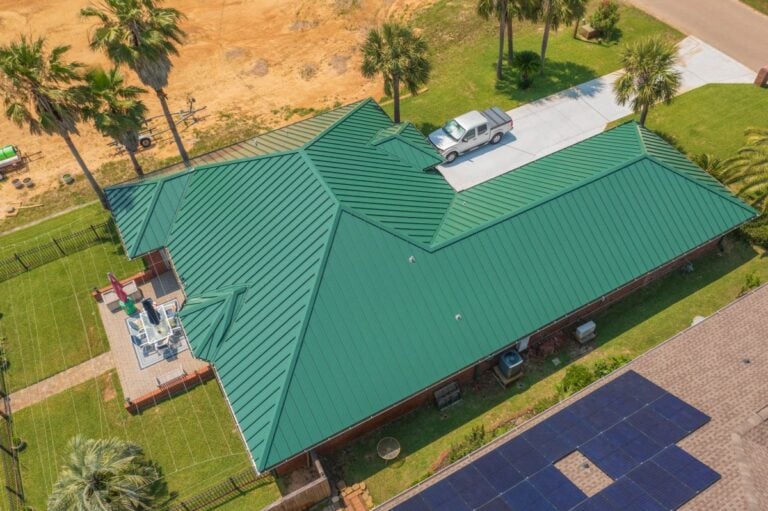
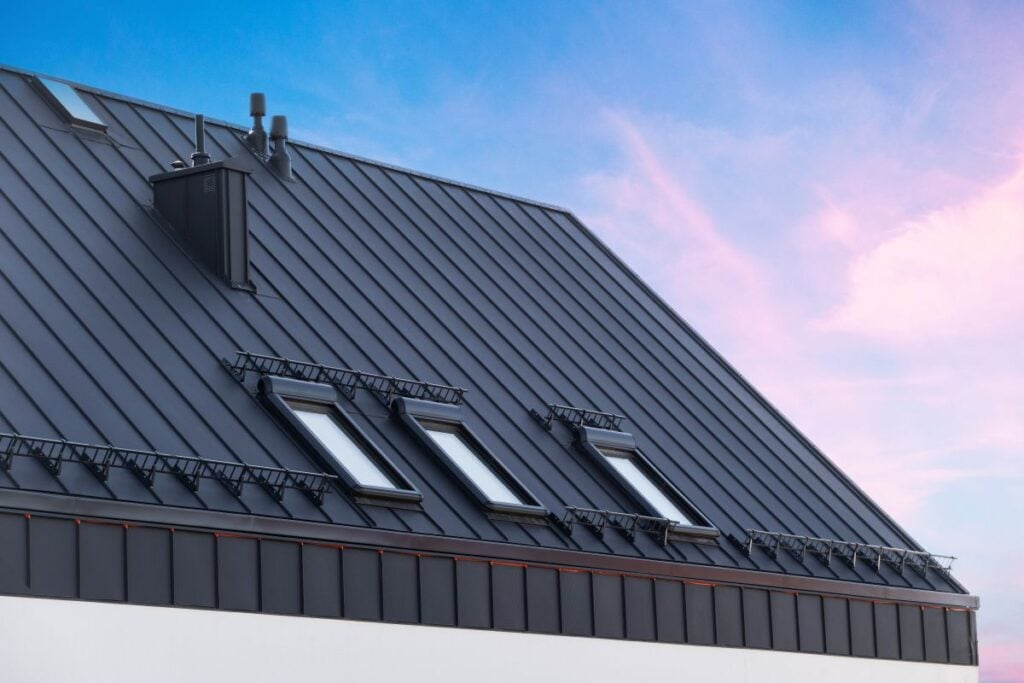
Standing seam metal roofs feature raised seams that conceal fasteners beneath the panels. This design improves water resistance and allows for lower slope applications.
Because seams are elevated above the water plane, these systems perform better on roofs with limited pitch.
- Typical minimum slope: Often 1:12 depending on panel design.
- Hidden fasteners: Reduced exposure to moisture.
- Seam height: Helps block water intrusion.
Standing seam systems are often chosen for low slope residential roofs.
3. Corrugated Metal Roofing
Corrugated metal panels use a wave-like profile that increases strength. These panels often use exposed fasteners similar to other ribbed systems.
Slope requirements are influenced by panel overlap and fastening patterns.
- Typical minimum slope: Commonly 3:12.
- Panel overlaps: Require proper drainage.
- Fastener sealing: Critical for leak prevention.
Improper slope increases maintenance needs.
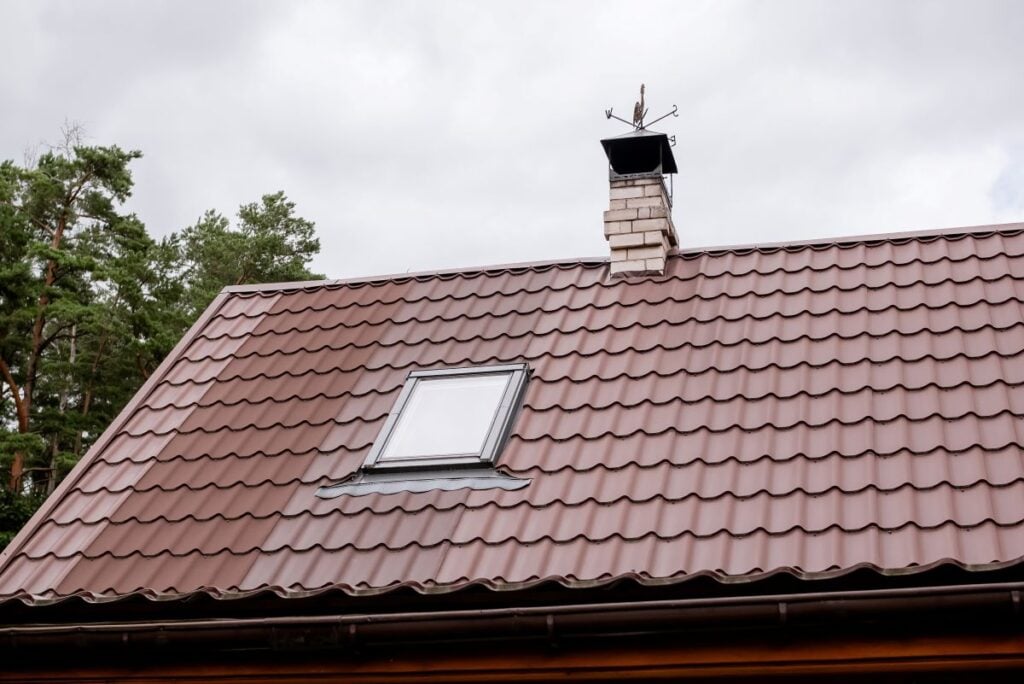
4. Metal Shingles and Tiles
Metal shingles are designed to mimic traditional roofing materials. They interlock and overlap in a pattern similar to asphalt shingles.
Because of their design, metal shingles generally require moderate slopes.
- Typical minimum slope: Often 4:12.
- Interlocking design: Relies on gravity for drainage.
- Visual appeal: Common on steeper residential roofs.
Slope ensures proper water shedding between panels.
What Happens If the Roof Slope Is Too Low
Installing a metal roof on a slope below manufacturer recommendations can lead to ongoing problems. These issues may not appear immediately but often develop over time.
Water moves more slowly on low slope roofs, increasing the chance of infiltration at seams and penetrations.
- Standing water: Puts stress on seams and fasteners.
- Backflow risk: Water can move upward during heavy rain.
- Increased leaks: Long-term exposure leads to failure.
Low slope misuse often voids warranties.
How Roof Slope Affects Drainage and Performance
Slope directly influences how water behaves on a roof surface. Steeper slopes allow water to exit quickly, while lower slopes slow drainage.
In metal roofing, prolonged water contact increases corrosion risk and stresses sealants. Proper slope minimizes these risks by keeping the roof surface dry.
- Faster runoff: Reduces moisture exposure time.
- Cleaner surface: Debris washes off more easily.
- Lower maintenance: Fewer moisture-related issues.
Good drainage supports long-term durability.
Measuring Roof Slope Accurately
Knowing your roof slope is essential before selecting a metal roofing system. Measurement can be done from the attic or roof surface using basic tools.
Accuracy matters because small differences in slope can affect system eligibility.
- Level and tape measure: Common measurement method.
- Attic measurement: Safer for some homeowners.
- Professional verification: Ensures accuracy.
Confirming slope prevents costly material mismatches.
Can Underlayment Compensate for Low Slope
Some homeowners assume that adding extra underlayment allows metal roofing on flatter slopes. While underlayment adds protection, it does not replace slope requirements.
Underlayment is a secondary barrier, not the primary drainage system. Relying on it alone increases risk.
- Added protection: Helps manage moisture temporarily.
- Not a substitute: Does not change water flow behavior.
- Limited lifespan: Underlayment degrades over time.
Slope remains the primary defense.
Building Codes and Manufacturer Guidelines
Local building codes and manufacturer specifications often dictate minimum slope requirements. These standards are designed to ensure safety and performance.
Ignoring these guidelines can result in failed inspections or denied warranty claims.
- Code compliance: Required for permitted projects.
- Manufacturer limits: Protect product performance.
- Inspection standards: Verify proper installation.
Following guidelines protects homeowners long-term.
Common Misconceptions About Metal Roof Slope
Metal roofs are often marketed as suitable for nearly any roof, which can create confusion. Not all metal roofing systems are designed for low slope applications.
Choosing the wrong system for your slope increases long-term risk, even if installation appears correct initially.
- Not all metal is equal: Panel design matters.
- Slope still matters: Metal is not leak-proof without gravity.
- Design limitations: Each system has boundaries.
Understanding these realities prevents disappointment.
Choosing the Right Metal Roof for Your Slope
Selecting the right metal roofing system starts with knowing your roof slope. From there, panel type, seam design, and fastening methods can be matched appropriately.
Homeowners should consider long-term performance rather than focusing only on appearance or cost.
- Slope compatibility: First selection factor.
- System design: Match panel type to pitch.
- Longevity goals: Choose systems built for conditions.
Correct pairing improves performance.
Get Clear Guidance Before Choosing a Metal Roof
Understanding the minimum slope for metal roof systems helps homeowners make confident, informed decisions. Slope affects everything from drainage to warranty coverage, making it a critical factor in metal roof performance.
If you are considering a metal roof and want help understanding how your roof slope affects your options, Quality Roofing can provide clear guidance to help you choose the right solution for your home. Reach out today to learn more!