 (850) 753-0041


Attic Breeze Solar Fan: Why Homeowners Choose It
July 7, 2026
11 minutes Read
If you’ve been searching for a smarter way to manage your home’s temperature and protect your roof from the brutal Florida heat, the attic breeze solar fan might be exactly what you’ve been missing. Attic ventilation is one of the most overlooked components of a healthy, energy-efficient home, but the right roof ventilation system can make a significant difference in both comfort and long-term roofing performance. If you’re exploring options for improving your home’s roofing system, solar attic ventilation is a conversation worth having. Here’s what this blog covers:
- What the Attic Breeze solar powered attic fan is and how it works
- The key benefits that make it a top-rated solar powered roof vent for Florida homeowners
- How it compares to other attic ventilation options
- What to look for when selecting the right model, including solar panel type and mounting style
- Frequently asked questions homeowners commonly have
What Is an Attic Breeze Solar Fan and How Does It Work?

The Attic Breeze solar fan is an American-made, solar powered attic ventilator designed to exhaust hot air from residential attic spaces using energy from the sun, with zero electrical operating costs. Unlike standard electric attic fans that draw power from your home’s electrical system around the clock, Attic Breeze fans are solar powered, meaning they run whenever the sun shines and add nothing to your monthly energy costs.
What sets Attic Breeze apart from competing solar powered roof vents is the quality of its construction. Most lower-cost alternatives are built with plastic housing that can warp, crack, or degrade under prolonged sun exposure and heat. Attic Breeze fans use all-metal construction with corrosion-resistant zincalume alloy and stainless steel components. The seams are welded rather than riveted, which matters in a humid, storm-prone climate like northwest Florida, where rattling fasteners and gaps in fan housings can eventually allow moisture intrusion. Each unit also features a self flashing base that integrates cleanly with standard roofing materials, creating a watertight seal without the need for additional flashing components or complex modifications to your roof deck.
How a Solar Powered Attic Fan Works
The basic principle behind solar attic fan installation is straightforward. Hot air rises and accumulates at the peak of your attic. Without a way to push that air out, Florida attic heat can cause temperatures to exceed 140 to 150 degrees Fahrenheit on a summer afternoon. The solar powered fan draws energy from sunlight, runs the motor, and exhausts that trapped hot air out through the roof, directly reducing your home’s energy costs by lessening the load on your air conditioning system.
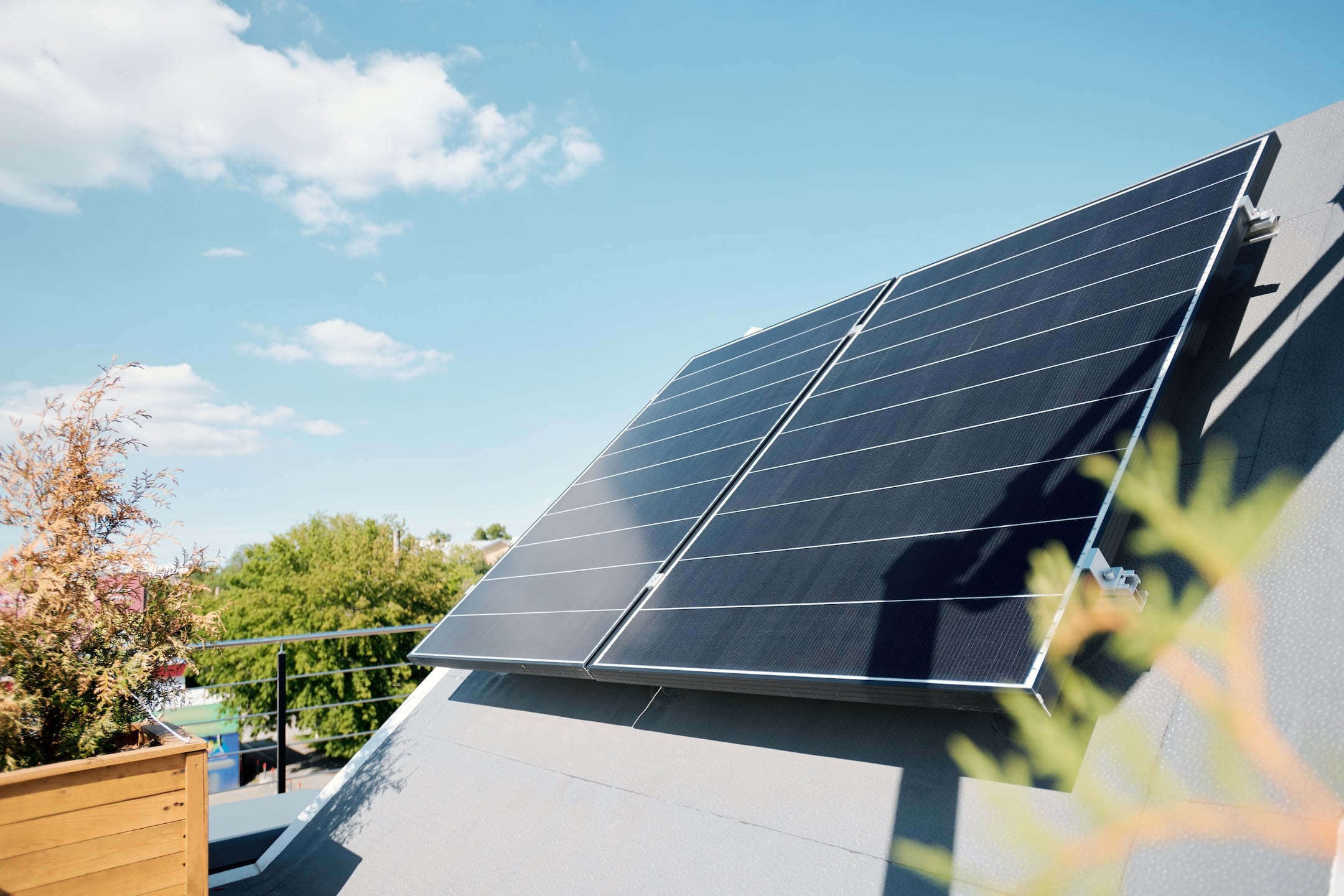
- Solar panel: Converts sunlight directly into electricity to power the motor with no wiring or electrician required, making easy installation possible for roofing professionals without electrical subcontractors.
- Motor-driven fan blade: Pulls hot air from the solar powered attic space and forces it out through the roof-mounted unit, actively reducing attic heat.
- Soffit intake: Works in tandem with existing soffit vents to draw cooler outside air into the attic from below, creating balanced airflow.
- Integrated thermostat (available on some models): Activates the fan automatically when the attic reaches a preset temperature threshold, optimizing performance without any manual operation.
Why Attic Ventilation Matters in Florida
Florida’s climate creates unique challenges for attic spaces. High humidity, intense UV exposure, and long summer seasons mean attics without adequate ventilation can experience accelerated shingle aging, mold growth on roof decking, and compromised insulation performance. Attic moisture control is especially critical in coastal areas where warm, humid air enters the attic space regularly. We’re proud to serve home and business owners in Pensacola, FL, and nearby communities with roofing and ventilation services built to handle these exact conditions.
The Florida Building Code requires a net free ventilating area of no less than 1/150 of the area of the space ventilated, underscoring just how seriously state regulators view proper attic airflow for homes across Florida.
The Attic Fan Benefits Homeowners Notice Most
There are several practical reasons the Attic Breeze solar powered attic fan has become a go-to choice among energy efficient home upgrades for Florida homeowners. The benefits show up in reduced energy costs, roofing longevity, and everyday comfort.
1. Zero Operating Energy Costs
Because the fan is solar powered, there are no ongoing electricity costs added to your utility bill. This is a meaningful advantage over traditional powered attic ventilators, which consume energy continuously and can actually cancel out some of the cooling savings they are supposed to generate. A solar powered unit only draws energy when the sun is providing it, which also happens to be the peak time of day for Florida attic heat.
2. Extended Roof Life Through Attic Heat Reduction
Excessive heat in the attic does not just affect your comfort. It affects your roof. Shingles are bonded with asphalt that softens, degrades, and ages faster when the roof deck temperature stays elevated for prolonged periods. Effective attic heat reduction keeps roof deck temperatures lower, which can meaningfully extend your roof’s lifespan and delay the need for costly replacement.
3. Reduced AC Strain and Lower Energy Costs
When attic temperatures spike, that heat radiates downward through your ceiling insulation and into your living spaces. Your air conditioner then works harder to compensate, which drives up energy costs month after month. By exhausting that heat before it transfers into the living area, a solar powered attic fan helps your cooling system operate more efficiently, delivering real, measurable savings on your summer utility bills.
4. Easy Installation and All-Weather Durability
Attic Breeze fans are designed for easy installation by roofing professionals. The self flashing base eliminates the need for a separate flashing kit, and because the unit is solar powered, no electrical wiring or licensed electrician is required. Once the fan is mounted and the self flashing base is sealed to the roof deck, installation is complete. Combined with all-metal construction and welded seams, these fans hold up against coastal Pensacola conditions, where salt air and humidity accelerate corrosion on lower-quality products.
Is a Solar Attic Fan Worth It? Comparing Your Options
Is a solar attic fan worth it for your home? The answer depends on your current ventilation setup, attic square footage, and how much your AC is working to compensate for attic heat. Here is a side-by-side comparison to put solar attic fan cost in context against other common ventilation approaches:
| Ventilation Type | Operating Cost | Requires Electrician | Easy Installation | Expected Lifespan |
| Ridge Vents (passive) | None | No | Yes | 20+ years |
| Electric Powered Attic Ventilator | ~$160/year in energy costs | Yes | No | 4-5 years |
| Attic Breeze Solar Powered Attic Fan | None | No | Yes (self flashing) | Lifetime warranty |
| Turbine Vents (whirlybird) | None | No | Yes | 10-15 years |
The key takeaway: solar fans offer the best balance of active attic heat reduction and zero ongoing energy costs. Ridge vents are an excellent passive roof ventilation system, but they rely entirely on natural convection. On calm, sweltering days in Florida when there is no breeze to drive natural airflow, a solar powered attic fan actively exhausts heat rather than waiting for conditions to cooperate.

What to Look for When Choosing Your Attic Breeze Model
Attic Breeze offers several models with varying solar panel types, wattage ratings, and solar fan CFM output. Choosing the right unit for effective attic ventilation in Florida depends on your attic’s square footage, roof pitch, and sun exposure.
- CFM rating: Cubic feet per minute indicates how much air the fan can move. A larger attic requires a higher CFM rating to achieve proper heat reduction in the solar powered attic space.
- Solar panel type: Attic Breeze units use high-efficiency monocrystalline solar panels on premium models, which deliver more power output per square inch than standard polycrystalline panels and perform better on partly cloudy days.
- Mounted solar panel vs. integrated panel: Some Attic Breeze models feature an integrated panel attached directly to the fan housing, while others offer a remotely mounted solar panel that can be positioned separately for optimal sun exposure. A remotely mounted solar panel is a strong option when the ideal fan placement on the roof does not receive full southern exposure.
- Self flashing base: Every Attic Breeze unit includes a self flashing base for easy installation on standard sloped roofs. This built-in design eliminates extra parts and keeps the installation straightforward for roofing professionals.
- Thermostat and humidistat combo: This option activates the fan based on both heat and humidity levels, which is especially valuable for attic moisture control in Florida’s humid Gulf Coast climate.
- Lifetime warranty: Attic Breeze backs its flagship models with a lifetime warranty on both the motor and the housing, reflecting genuine confidence in build quality and giving Florida homeowners long-term peace of mind.
Frequently Asked Questions About Solar Attic Fans
Homeowners researching solar attic fan installation tend to ask the same practical questions. Here are clear answers to the most common ones.
Does a solar powered attic fan work on cloudy days?
Yes, a solar powered attic fan does operate on cloudy or overcast days, though at reduced output. Since fan performance is tied to available sunlight, power will be lower when cloud cover limits what the solar panel type can generate. In practice, this matters less than it sounds, because attic temperatures in Florida also tend to be lower on overcast days, meaning peak ventilation demand naturally decreases alongside panel output.
Does easy installation mean I can do it myself?
Attic Breeze provides installation guides and the self flashing base makes the process more straightforward than fans that require separate flashing kits or electrical wiring. That said, cutting a penetration in a Florida roof and sealing it correctly is a task most homeowners are better off leaving to a roofing professional. Improper sealing is the leading cause of attic fan-related roof leaks, and the cost of professional installation is modest compared to what a water intrusion repair can run.
What solar panel type does Attic Breeze use?
Premium Attic Breeze models use monocrystalline solar panels, which are the most efficient solar panel type available for small-scale applications like attic ventilation. Monocrystalline panels produce more electricity per square inch than polycrystalline alternatives, which means the fan runs at higher capacity even on partially cloudy Florida afternoons. Some models also offer a remotely mounted solar panel option, allowing the panel to be positioned separately from the fan for maximum sun exposure regardless of where the fan itself is placed on the roof.
How does solar attic fan cost compare to the energy savings?
Solar attic fan cost typically runs between $500 and $800 fully installed for a quality unit like Attic Breeze. Florida homeowners in similar climates have estimated annual cooling savings in the range of $100 to $130 per year, putting the average payback period around five to six years. Beyond that window, the solar powered attic fan continues reducing energy costs indefinitely with no operating expenses, and the lifetime warranty means you are not budgeting for unit replacement either.
Is Attic Breeze a good brand for Florida homes?
Attic Breeze is widely regarded as one of the highest-quality solar powered attic fan brands available, and its all-metal, welded construction is particularly well-suited to Florida’s heat, humidity, and coastal conditions. The self flashing design simplifies installation, the lifetime warranty covers the motor and housing, and the monocrystalline solar panel type ensures strong performance through Florida’s long sun-heavy summers. For homeowners looking for a ventilation upgrade that pays for itself and lasts, it is a brand worth serious consideration.
Quality Roofing Solutions: Your Partner for Smarter Roofing

Choosing the right attic ventilation system is part of a bigger picture. Your roof, your attic, and your home’s energy costs are all connected, and the decisions you make about one directly affect the others. At Quality Roofing Solutions, we have been helping homeowners across Pensacola and northwest Florida make smart, informed roofing decisions for over 20 years. We understand the specific demands Florida’s climate places on roofs and attic systems, and we are here to help you find solutions that perform season after season.
Whether you are considering Attic Breeze solar powered attic fan installation alongside a roof replacement or you want an expert evaluation of your current roof ventilation system, our team is ready to help. Contact our team today to schedule your free roof inspection and get a no-pressure recommendation from professionals who know Florida roofing inside and out.